
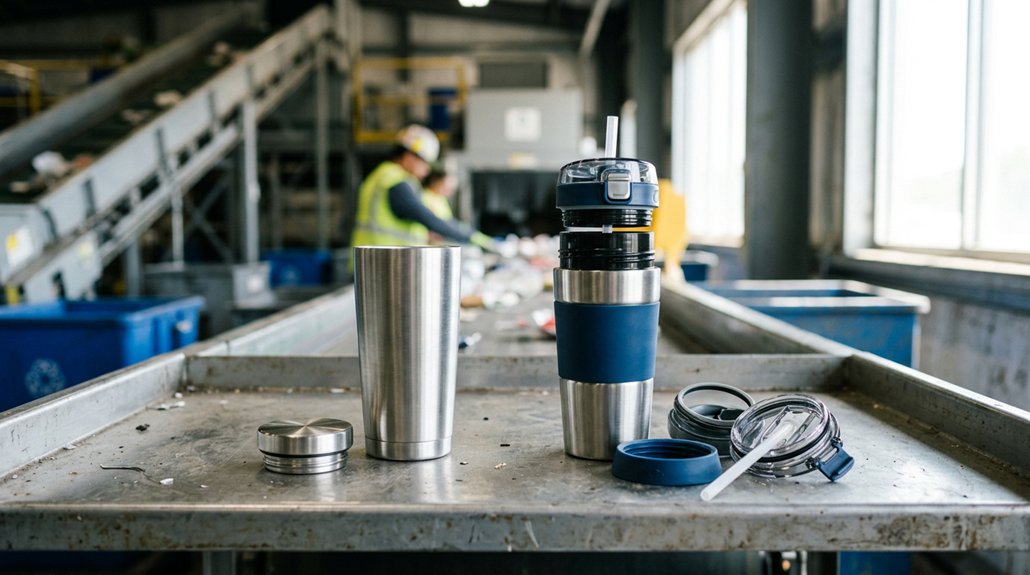
Pick stainless steel if end-of-life recyclability matters most. A simple 18/8 stainless tumbler is the stronger choice than plastic, and usually the better buy than glass because it lasts longer, dents instead of shattering, and gives you years of use before recycling even matters.
If you want the easiest version to recycle, buy a plain stainless tumbler with as few extra parts as possible, like a YETI Rambler 20 oz, Hydro Flask All Around 20 oz, or Stanley Adventure Stacking Beer Pint 16 oz. These models use durable stainless bodies that hold up well, skip fragile glass, and avoid the mixed-material mess that makes cheap tumblers harder to process.
Plain glass comes second, especially if you want a clean-tasting cup for home use. A basic borosilicate or tempered glass tumbler can recycle well, but it is not the better value for travel because breakage kills lifespan fast and many insulated glass designs add silicone sleeves, bamboo lids, or glued parts that recyclers often reject.
Skip mixed-plastic tumblers, acrylic bodies, bonded rubber grips, and complicated lid systems with built-in straws if recyclability sits high on your list. Those designs look convenient at checkout, but they are usually the wrong buy at the end of life because sorting centers reject multi-part materials far more often than a simple stainless shell.
Which Tumbler Material Recycles Most Easily?
Stainless steel recycles most easily, and it’s the smarter tumbler material to buy for most people. If you want one cup that performs well, lasts for years, and still has a realistic end-of-life path, a stainless steel tumbler is the stronger choice.
Models like the YETI Rambler 20 oz Tumbler, Hydro Flask All Around 20 oz, and Stanley Quencher H2.0 30 oz all use stainless steel, usually 18/8 food-grade steel. That matters because metal recycling is widely established, while silicone and mixed-material cups often end up as trash even if brands talk big about sustainability.
Stainless steel also wins on everyday ownership costs. It handles drops better than bamboo, holds temperature far longer than recycled plastic, and many models are dishwasher safe, including the Hydro Flask All Around and most YETI Rambler lids and cups. Its durability also supports customer loyalty because people are more likely to stick with products that last.
Stainless steel keeps ownership simple: tougher than bamboo, better insulated than recycled plastic, and often dishwasher safe.
If your local curbside program won’t take drinkware, stainless steel gives you better odds through scrap metal yards or brand-backed mail-in options. That makes it worth buying over bamboo fiber cups and silicone tumblers, which sound eco-friendly but usually create more end-of-life hassle.
Bamboo works best only if you care more about a plant-based feel than long-term durability. Cups made with bamboo composite often cost $15 to $30, but they stain, crack, and usually include resins that make recycling far less straightforward than buyers expect.
Recycled plastic sits in the middle, but I’d only buy it if price matters most. A recycled plastic tumbler in the 16 oz to 24 oz range can cost $10 to $20, and it’s lighter for commuting, but insulation is weaker, scratch resistance is worse, and local recycling rules vary too much to trust as a real advantage.
Silicone is the one I’d skip if recyclability is your goal. Silicone tumblers and collapsible cups can be handy for travel, but most municipal programs don’t accept them, and their biggest selling point is reuse, not easy recycling.
If you’re choosing between materials and want the best all-around value, buy a stainless steel tumbler in the 20 oz to 30 oz range from YETI, Hydro Flask, Stanley, or Owala. You get better insulation, better durability, stronger resale and replacement support, and the easiest recycling path of the common tumbler materials.
Why Are Glass Tumblers Easier to Recycle?
Glass tumblers win on recyclability, so if easy end-of-life disposal matters in your buying decision, glass is the stronger choice over stainless steel or plastic. Brands like Duralex Picardie tempered glass tumblers, Bormioli Rocco Rock Bar glasses, and Libbey drinking glasses all use a material that most recycling systems already process efficiently, as long as you rinse the glass first and avoid mixing in lids, silicone sleeves, or straws.
Clean glass usually gets crushed into cullet, then manufacturers remelt it into new jars, bottles, and drinkware without degrading the material. That gives glass a real advantage over many plastic tumblers, especially cheaper acrylic cups under $15 that often crack, stain, and rarely turn into the same quality product again. Glass can be recycled endlessly with no loss in quality or purity, which is a major closed-loop advantage.
If you want a tumbler you can use for years and recycle easily later, a simple soda-lime or tempered glass model gives you better value than trendy hybrid designs with glued-on wraps or mixed materials. A 12 oz to 16 oz Duralex tumbler often costs around $4 to $8 per glass, and it gives you dishwasher safety plus a much simpler recycling path than insulated plastic cups with multiple parts.
| Product type | What happens at recycling | Why it matters when buying |
|---|---|---|
| Plain glass tumbler | Crushed into cullet and remelted | Easier recycling, steady material quality |
| Stainless steel tumbler | Recyclable, but harder to process in curbside bins | Better for durability, weaker for simple home recycling |
| Plastic tumbler | Often downcycled or rejected | Usually the one to skip if recyclability is a priority |
Glass also helps reduce demand for raw materials like sand, soda ash, and limestone, and recycled cullet uses less energy than making new glass from scratch. The tradeoff is obvious, glass breaks more easily, so it is worth buying only if you care more about clean taste, dishwasher safety, and recyclability than drop resistance.
For most buyers, that means glass works best at home, on a desk, or for iced coffee and water, not for commuting or gym use. If you need cup holder fit, leakproof lids, and all-day insulation, a Stanley Quencher H2.0 30 oz or Yeti Rambler 20 oz is the better buy, even though glass still wins the recycling argument.
Why Are Plastic Tumblers Hard to Recycle?
Most plastic tumblers aren’t worth buying if easy recycling matters to you. Brands often mix polypropylene, Tritan, silicone seals, glued-on wraps, and colored finishes in one cup, and that combo makes the tumbler much harder to recycle than a simple clear bottle. That problem gets worse when mixed materials raise contamination risks and make sorting harder at recycling facilities.
That matters at the end of the cup’s life, but it also matters while you shop. If you want a tumbler you can keep for years, skip cheap plastic models with soft straws, bonded grips, and decorative outer shells, because they wear out fast and give you almost no recycling upside later.
A basic polypropylene tumbler can cost under $10, but many still use lids with multiple plastics and silicone parts that local programs reject. Even reusable plastic options from big brands can create sorting problems, especially dark colors, printed graphics, and glued labels that facilities struggle to process cleanly.
If you’re deciding between plastic and stainless steel, stainless usually gives you the better value. A YETI Rambler 20 oz, Stanley Quencher 30 oz, or Owala Travel Tumbler costs more upfront, often $25 to $45, but you get longer lifespan, better insulation, stronger odor resistance, and fewer end-of-life headaches.
Plastic still makes sense if weight, lower price, and kid-friendly use matter most. In that case, the stronger choice is a simple, uninsulated tumbler with minimal parts, clear body panels, and a widely accepted plastic like Tritan from brands such as CamelBak, because the simpler the build, the less likely it’s to become waste quickly.
Which Tumbler Features Get Rejected in Recycling?
Yes, tumbler recyclability usually fails because of the extras, not the cup body. If recycling matters to you, skip tumblers with built-in straws, flip spouts, silicone gaskets, rubber boots, glued-on wraps, and metal add-ons, because those parts get rejected far more often than a plain stainless steel or single-material plastic cup.
The worst offenders are mixed-material lids. A lid that combines polypropylene plastic, silicone seals, and stainless pins, like many handled 30 oz and 40 oz tumblers from Stanley, Owala, and Simple Modern, gives sorting equipment more chances to fail and gives recyclers less reason to bother. This is part of a bigger plastic recycling gap, since U.S. plastic recycling rates are still below 6%.
Here’s the short version if you’re buying with end-of-life disposal in mind.
| Feature | Why facilities reject it | What usually happens |
|---|---|---|
| Built-in straw or flip lid | Mixed plastics and small moving parts | Sorting fails or lid gets trashed |
| Silicone gasket or rubber boot | Flexible small parts | Falls through screens |
| Metal tracker, wrap, or decorative band | Contaminates plastic stream | Raises batch rejection risk |
Residue makes the problem worse. Coffee film, smoothie sludge, and trapped mold around seals can spoil nearby recyclables, so a dirty tumbler has a good chance of getting pulled even if the body itself uses recyclable polypropylene or stainless steel.
If you want the stronger choice, buy a simpler tumbler with fewer removable parts. A basic YETI Rambler 20 oz stainless tumbler, around $35, or a Stanley Classic Trigger-Action Travel Mug 20 oz, around $30, makes more sense than a complex straw tumbler if you care about durability, easy cleaning, and fewer rejection points.
Skip heavily accessorized models if long-term practicality matters more than trend value. A 40 oz tumbler with a straw lid, boot, charm, and handle may look better on a product page, but it gives you worse dishwasher results, more grime traps, and a lower chance of responsible recycling later.
How Do You Choose a Recyclable Tumbler?
Pick 18/8 stainless steel if you want the recyclable tumbler most people should actually buy. It gives you the best mix of real recycling potential, durability, insulation, and long-term value, so models like the Yeti Rambler 20 oz Tumbler, Hydro Flask All Around Tumbler 20 oz, and Stanley Quencher H2.0 FlowState 30 oz are the stronger choices than plastic or acrylic alternatives. Stainless steel also offers vacuum insulation, which helps maintain beverage temperature for hours.
Choose 18/8 stainless steel for the best balance of recyclability, durability, insulation, and long-term everyday value.
If you care most about easy recycling, skip mixed-material tumblers with glued parts, soft-touch coatings, and complicated lids. A simple stainless steel body has a far better shot at getting recycled than BPA-free plastic, and it also holds up longer, which matters more in real use than chasing a perfect eco claim on the box.
Recycled steel also uses about 60 to 75 percent less energy than virgin steel, which adds to its appeal.
For coffee and tea taste, glass or ceramic-lined tumblers can beat bare stainless steel, but they aren’t the smarter buy for most people. A Fellow Carter Move Mug 16 oz or a ceramic-lined option can preserve flavor well, yet they usually cost more, break more easily, and make less sense for commuting, gym bags, or daily travel.
If you mostly drink at home or in an office, they’re worth buying; otherwise, stainless steel still wins.
Match the tumbler to how you actually use it. If you need cup holder compatibility, leak resistance, and all-day toughness, the Yeti Rambler 20 oz and Hydro Flask 20 oz hit the sweet spot better than oversized designs.
If you want maximum capacity and trend-driven design, the Stanley Quencher 30 oz or 40 oz gives you that, but check your car’s cup holders first because the larger sizes can be awkward.
Plastic tumblers only make sense if low weight and low upfront cost matter more than recyclability or lifespan. That makes something like a simple BPA-free Tritan tumbler fine for casual use, but usually not worth buying over entry-level stainless models that last longer and feel better made.
In most cases, plastic is the weaker choice.
Before you buy, check for 18/8 food-grade stainless steel, dishwasher-safe parts, a lid with replaceable seals, and a shape that fits your daily carry. A tumbler that survives years of use beats a cheaper one you replace every season, so lifespan and price-to-performance ratio should drive your decision more than marketing claims about sustainability alone.
Frequently Asked Questions
Can Broken Tumblers Still Be Recycled Safely?
No, you should not put a broken tumbler in curbside recycling. Most programs reject shattered stainless steel tumblers like the Stanley Quencher H2.0 40 oz, YETI Rambler 30 oz, and Owala Travel Tumbler because they mix 18/8 steel, plastic lids, silicone seals, and sometimes glass or ceramic liners.
If your tumbler breaks, separate the parts first. Recycle clean stainless steel bodies at a scrap metal drop-off if your local center accepts them, and trash cracked lids, straws, and silicone gaskets unless your city lists those exact plastics by number.
For glass tumblers, skip curbside if the glass shattered. Wrap the pieces in thick paper or a box so nobody gets cut, then throw them away unless your local recycler specifically accepts broken container glass.
If you are deciding what to buy next, stainless steel models from YETI, Hydro Flask, and Stanley usually give you the better value because they survive drops far better than glass tumblers. If durability matters more than style, skip fragile glass options and buy an 18/8 stainless model with a replacement lid program, dishwasher-safe parts, and easy-to-find seals.
Do Custom-Printed Tumblers Affect Resale or Donation Options?
Yes, custom-printed tumblers usually hurt resale and make donation harder, so skip personalization if you think you might sell or give it away later. A plain Stanley Quencher H2.0 40 oz, YETI Rambler 30 oz stainless steel tumbler, or Owala 40 oz SmoothSip keeps broader appeal and holds value better than the same cup with a name, logo, or niche graphic.
Resale drops because buyers want neutral colors and standard finishes they can use at work, the gym, or in the car without someone else’s branding on display. A laser-engraved YETI or powder-coated Hydro Flask with no custom text simply moves faster on Facebook Marketplace, Mercari, or local resale apps.
Donation centers also reject more personalized drinkware, especially if it looks promotional, heavily worn, or hard to clean. Stainless steel models in common sizes like 20 oz to 40 oz, with intact lids, no odor, and dishwasher-safe parts, have the best chance of getting accepted.
If resale matters, buy the plain version and save the money. Paying extra for custom printing rarely adds value, and in most cases it makes the tumbler less useful to the next owner, which makes it the weaker choice.
Are Reusable Tumblers Accepted in Local Take-Back Programs?
Usually no, most local take-back programs do not accept reusable tumblers, and I would not buy a tumbler expecting easy end-of-life recycling. Stainless steel models like the YETI Rambler 20 oz, Hydro Flask All Around 20 oz, and Stanley Quencher 30 oz last longer and give better value, but mixed parts like silicone seals, plastic lids, and powder coatings make take-back acceptance hit or miss.
If recycling matters to you, skip cheap hybrid tumblers with glued-in parts and unknown plastics. The stronger choice is a well-built 18/8 stainless steel tumbler from a brand with replaceable lids, straws, and gaskets, because you will keep it in service longer and avoid relying on a local program that may reject it anyway.
Before you toss one, check your city program, TerraCycle, and the brand’s support page for that exact model. Brands like Owala, YETI, and Hydro Flask usually offer replacement parts, and that is often more worth buying into than assuming a take-back option exists.
How Should I Clean a Tumbler Before Disposal?
Clean the tumbler before you toss it, especially if it has silicone gaskets, a straw, or dried drink residue. Take apart every removable piece, wash the body, lid, gasket, and straw with warm water and mild dish soap, then scrub stuck-on residue with a bottle brush and dry everything fully.
If you are disposing of a stainless steel tumbler like a Stanley Quencher 40 oz, Yeti Rambler 30 oz, or Owala 40 oz, separate the stainless steel body from the plastic lid and silicone seals first. The steel shell usually has better recycling value, while lids, sliders, and gaskets often belong in the trash unless your local program accepts mixed plastics and silicone.
If the tumbler still works but smells bad or has a worn gasket, do not throw it out too fast. Replacing a Stanley Quencher gasket or a Yeti Rambler straw lid often costs far less than buying a new tumbler, which makes repair the better value if the insulation and body are still in good shape.
Is Donating Old Tumblers Better Than Recycling Them?
Yes, donate a tumbler first if it still seals properly, keeps drinks hot or cold, and does not have cracks in the lid or body. That is the better choice than recycling because someone can keep using a stainless steel cup like a Stanley Quencher 40 oz, Yeti Rambler 30 oz, or Owala 24 oz instead of buying a new one.
Skip donation if the tumbler leaks, has damaged vacuum insulation, or uses a broken straw lid that no longer closes securely. In that case, recycling through brand programs from Stanley, Yeti, or Hydro Flask is the stronger choice because it handles stainless steel and plastic parts more responsibly than tossing it in household recycling.
If you are deciding what to replace it with, buy a tumbler that lasts longer and stays useful enough to donate later. A Yeti Rambler 30 oz in 18/8 stainless steel usually offers better long-term value than cheaper insulated cups under $20, while an Owala FreeSip 24 oz gives you better everyday portability and cup holder fit than a bulky 40 oz tumbler.
Conclusion
Glass and stainless steel tumblers are the easier buy if you care about end-of-life recycling. Stainless steel is the stronger choice for most people because brands like Yeti Rambler, Hydro Flask All Around, and Stanley Quencher use durable 18/8 stainless bodies that hold up better in daily use and have a better shot at metal recycling if you can separate the lid and gasket.
Glass works too, but I would only call it worth buying if you actually want a glass tumbler for taste or aesthetics, not for durability. A simple borosilicate model with a basic screw lid beats any hybrid design with glued sleeves, bamboo wraps, or bonded liners.
Skip plastic tumblers if recycling matters in your buying decision. Even well-known options in Tritan or mixed plastics often use multi-material lids, straws, and silicone seals that make end-of-life sorting less reliable, and bamboo fiber tumblers are not much better once resin binders and inner coatings enter the mix.
If you want the safest bet, buy a plain stainless steel tumbler in a common size like 20 oz or 30 oz, with as few parts as possible. A dishwasher-safe model with a removable silicone gasket, a standard threaded lid, and no permanent sleeve gives you better value long term than a trendier design that looks good on a shelf but gets harder to recycle later.
Before you buy, check your local recycling rules, because a recyclable label does not mean curbside acceptance. If recycling sits high on your list, stainless steel beats plastic and bamboo, and a simple glass tumbler ranks second if you can live with the extra fragility.