
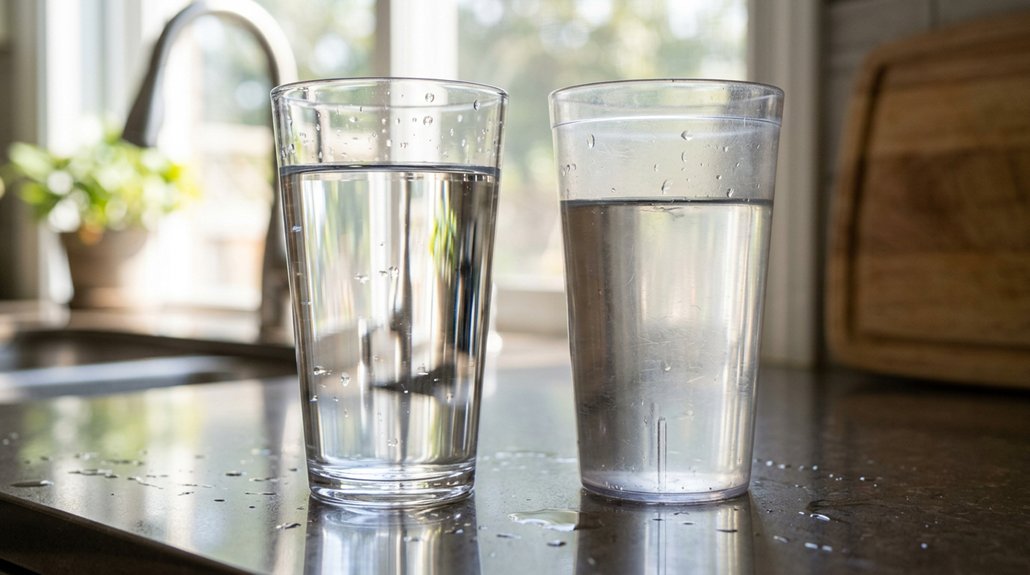
Yes, Tritan tumblers are usually worth buying over cheap regular plastic, especially if you want a cup that stays clear, survives the dishwasher, and does not get funky after a few weeks. For most buyers, Tritan is the stronger choice because it resists odors, scratches, and stress cracks better than standard acrylic or low-cost polypropylene.
You will see the difference in daily use. A 20 oz Tervis or CamelBak Eddy+ Tritan bottle usually holds up far better to drops, hot cars, and repeated dishwasher cycles than bargain tumblers in the $5 to $10 range.
The tradeoff is price. Expect to pay about $12 to $25 for a good Tritan tumbler, often 30% to 45% more than basic plastic, but the better value usually comes from replacing it less often.
If you care most about durability, dishwasher safety, and clean taste, buy Tritan. If you only need the cheapest cup possible and do not care about scratches, clouding, or long-term wear, skip Tritan and buy regular plastic.
How Tritan Tumblers Compare to Other Plastics
If you want a plastic tumbler you can reuse for years, Tritan is usually worth buying over basic PET, PP, SAN, or older polycarbonate. It costs more up front, but it’s the stronger choice if you care about clarity, dishwasher safety, and not replacing a cloudy or cracked cup after a few months. One reason is that Tritan is BPA-free, which makes it a safer option for drinkware than some older plastics.
In real use, Tritan tumblers from brands like Tervis, CamelBak, and Ello hold up better than cheaper acrylic or SAN cups sold at big-box stores. A 16 to 24 ounce Tritan tumbler usually stays clear after hundreds of dishwasher cycles, while lower-cost plastic often hazes, scratches, or develops stress cracks much sooner.
Tritan also looks better on the counter and in the car because it keeps that glass-like finish longer than PP or PET. If you reuse the same iced coffee cup every day, that matters more than a small upfront saving.
The trade-off is price. Expect Tritan to cost about 30% to 45% more than budget plastic tumblers, so if you just need a cheap party cup or something for occasional use, skip this one and buy PP or PET instead.
For most buyers choosing a daily-use tumbler, Tritan gives better value than regular plastic because it lasts longer and looks newer longer. If your priority is the lowest price, regular plastic wins, but if you want the better long-term buy, Tritan is the one I’d pick.
Are Tritan Tumblers Safe for Daily Use?
Yes, Tritan tumblers are safe for daily use, and they’re worth buying if you want a lightweight plastic tumbler without the usual BPA-related worries. Eastman Tritan is BPA-free, BPS-free, phthalate-free, and chlorine-free, which makes it a stronger choice than cheap generic plastic cups that rarely tell you what resin they use.
For most buyers, Tritan makes sense if you want something lighter than stainless steel and less breakable than glass. Brands like Owala, Simple Modern, and BrüMate use Tritan in some lids, straws, and bottles because it holds up well in daily use and stays clear without picking up smells fast. It also offers glass-like clarity without the breakage risk that comes with actual glass.
Tritan is a smart buy if you want something lighter than steel, tougher than glass, and reliable for everyday use.
It also performs well in the ways that actually affect buying decisions. Tritan handles repeated dishwasher cycles, resists stains better than cheaper plastics, and usually keeps its shape with drinks up to about 100°C, as long as the brand rates it for that heat.
That doesn’t mean every Tritan tumbler is an automatic buy. I’d skip unknown Amazon brands that say “BPA-free” but give no details on heat limits, dishwasher safety, or third-party testing, because brand quality matters just as much as the material.
If you want the safest and most durable daily driver overall, a stainless steel tumbler like the Stanley Quencher 40 oz, Owala Travel Tumbler 40 oz, or Yeti Rambler 30 oz is still the better buy for insulation, drop resistance, and long-term value.
But if you specifically want a clear, lightweight tumbler for water, iced coffee, or cold brew, Tritan is a safe material and usually the better value than cheap acrylic.
The bottom line is simple. A well-made Tritan tumbler from a reputable brand is safe for everyday use, worth buying for cold drinks and light hot-drink use, and a smarter pick than no-name plastic.
How Durable Are Tritan Tumblers?
Yes, Tritan tumblers are durable enough to buy, especially if you want something lighter and harder to crack than cheap acrylic or generic plastic cups. Brands like Tervis, Simple Modern, and BrüMate use Tritan because it handles drops, daily dishwasher cycles, and rough use better than budget plastic.
If durability matters more than all-day ice retention, Tritan is usually the better value than a flimsy gas station tumbler. The stronger choice is a double-wall Tritan tumbler from a brand with a good lid design, not a no-name cup that only lists “BPA-free plastic.”
A 16 oz or 24 oz Tervis tumbler usually holds up for years, and replacement lids are easy to find, which matters because the lid is often the first part to fail. That makes Tervis worth buying if you want a dependable everyday cup for water, soda, or iced coffee.
Tritan also handles temperature swings well. You can go from iced water to hot coffee without the cup warping or cracking, and that makes it more practical than cheaper polypropylene cups. Most double-wall Tritan tumblers give you decent insulation for a commute or a few hours at your desk, but they don’t compete with stainless steel options like the Stanley Quencher 30 oz or Yeti Rambler 20 oz if your top priority is long ice retention.
Dishwasher safety is another reason Tritan sells well. Good Tritan tumblers from Tervis and Simple Modern usually survive top-rack dishwasher cleaning far better than lower-grade plastic, which often turns cloudy or brittle over time. Some Tritan options are also top-rack dishwasher safe, which makes repeated cleaning easier for everyday use.
If you want a tumbler for daily use at home, in the car, or by the pool, Tritan makes more sense than glass because it’s lighter, safer around kids, and less likely to shatter.
Still, don’t treat Tritan as indestructible. Drop any tumbler hard enough on concrete and you can crack the body or damage the lid seal, and leakproof performance depends more on the lid design than the cup material.
If you need a tougher travel mug for bags and car commutes, a locking stainless steel model like the Contigo West Loop usually beats a Tritan tumbler.
For most buyers, Tritan is worth buying if you want a durable, dishwasher-safe tumbler in the $15 to $30 range. Skip this one only if you need maximum insulation, fully leakproof travel performance, or a premium feel, because stainless steel gives you more for those priorities.
If your goal is a tough everyday tumbler that fits cup holders, stays clear, and survives real daily use, Tritan holds up well over time.
Do Tritan Tumblers Stay Clear Longer?
Yes, Tritan tumblers usually stay clear longer than standard plastic tumblers, and if clarity matters to you, Tritan is worth buying. Eastman Tritan resists the clouding, hazing, and yellowing that cheaper acrylic or generic plastic cups pick up after repeated dishwasher cycles.
Tritan tumblers usually stay clearer longer, resisting the clouding, hazing, and yellowing that cheaper plastic cups often develop.
You see that difference fast with everyday family use. A well-made Tritan tumbler like the Tervis 16 oz tumbler or CamelBak Eddy+ kids cups keeps its glass-like look far longer than budget plastic sets from big-box stores, especially after frequent top-rack dishwasher washes. Many are also made from BPA-free materials, which adds peace of mind for everyday drinking use.
If you want tumblers that still look good after months of use, Tritan is the stronger choice. It gives you better value than bargain plastic because you don’t end up replacing cloudy cups as quickly.
That doesn’t mean every Tritan cup stays perfect forever. If you scrub it with abrasive pads, nest cups too tightly, or toss them around in a packed sink, you can still scratch the surface and dull the finish.
For most buyers, the smart move is simple. Skip the cheapest unbranded plastic tumblers and spend a little more on Tritan from Tervis, CamelBak, OXO, or Zak Designs, usually in the $10 to $25 range depending on size and lid style, because they stay clearer longer and hold up better in the dishwasher.
Are Tritan Tumblers Worth the Extra Cost?
Yes, Tritan tumblers are usually worth buying if you use one most days. You pay more upfront, often about 30% to 45% more than basic SAN or generic plastic, but brands like Nalgene, Contigo, and CamelBak justify it with better durability, dishwasher safety, and far better resistance to stains and odors.
For a daily-use cup, Tritan is the stronger choice. A 24 oz Contigo Shake & Go Tritan or a CamelBak Eddy+ Renew bottle holds up much better to backpack drops, hot car heat, and repeated top-rack dishwasher cycles than cheaper clear plastic cups that haze, crack, or keep a coffee smell after a few weeks. It also offers glass-like clarity without the weight and fragility that make glass less practical for everyday use.
If you want the best value, buy Tritan when durability matters more than insulation. A simple insulated stainless tumbler like a 30 oz Stanley Quencher or 20 oz Yeti Rambler keeps drinks cold longer, but a Tritan tumbler often weighs less, costs less, and survives everyday abuse better than bargain plastic cups in the $8 to $12 range.
Skip Tritan if you barely use a tumbler or tend to lose them. In that case, a cheaper $10 to $15 plastic tumbler from Mainstays, Tervis, or a basic Amazon brand gives you better value, because you won’t keep it long enough to earn back the higher price.
For most buyers deciding between cheap plastic and a better everyday cup, Tritan wins. It feels better in hand, stays clearer longer, cracks less often, and gives you fewer annoyances over time, which makes the extra cost easier to justify.
Frequently Asked Questions
Can Tritan Tumblers Retain Odors After Smoothies or Coffee?
Yes, Tritan tumblers usually resist odors well after smoothies or coffee, and that makes them worth buying if you want a lighter, lower-cost alternative to stainless steel. Eastman Tritan plastic has a neutral surface that does not hang onto smells the way cheaper polypropylene cups often do, especially if you wash it soon after use.
That said, Tritan is not unbeatable. If you leave a protein smoothie, cold brew, or milk-based drink sitting overnight, even good bottles like the Owala Tritan models or simple clear tumblers from Contigo can pick up a temporary smell around the lid gasket or straw, not the cup body itself.
For most buyers, the stronger choice is a quality Tritan tumbler with a removable silicone seal and dishwasher-safe parts. That combo cleans easier, stays fresher between uses, and gives you better value than bargain plastic tumblers that trap odors, stain faster, and feel like a skip after a few months.
Are Tritan Tumblers Suitable for Freezing Cold Beverages?
Yes, Tritan tumblers are worth buying for very cold drinks and freezer-chilled use, but not for long-term insulation. A good Tritan cup from CamelBak, Nalgene, or Tervis handles ice, slushies, and repeated freeze-thaw cycles without cracking, so it is the stronger choice over cheap acrylic tumblers.
Skip Tritan if you want your drink to stay icy for 8 to 12 hours. For that, a 20 oz Yeti Rambler, Stanley Quencher, or Owala stainless steel tumbler gives far better insulation, better leak resistance, and stronger overall value.
Tritan works best if you want lightweight drinkware, dishwasher safety, and lower prices, usually around $10 to $25 instead of $30 to $45 for insulated stainless steel. Just do not fill it to the rim and freeze the whole tumbler solid, because expanding liquid can still cause lid leaks or stress the cup over time.
Do Tritan Tumblers Come in More Design and Color Options?
Yes, Tritan tumblers usually come in more design and color options than stainless steel tumblers, and that is one of their biggest buying advantages. Brands like Tervis, BrüMate, Simple Modern, and Zak Designs sell Tritan models in clear, tinted, ombré, printed, textured, and seasonal finishes, so if style matters as much as drink temperature, Tritan is often the better value.
Tervis 16 oz and 24 oz Tritan tumblers stand out for sheer design variety, especially if you want licensed prints, monograms, or bright translucent colors. They are also dishwasher safe and hold their glass-like clarity better than cheap acrylic cups, so they are worth buying if you want a reusable tumbler that looks good after months of use.
BrüMate’s 26 oz Multishaker and other Tritan options lean more modern, with bold colors and cleaner finishes than budget plastic tumblers. If you want the widest range of patterns and novelty designs, Tervis is the stronger choice, but if you want a sleeker look with better lids and more premium styling, BrüMate is the better buy.
The main tradeoff is performance. Tritan resists stains, clouding, and yellowing better than standard plastic, but it will not match a vacuum-insulated stainless steel tumbler like the Stanley Quencher 30 oz or YETI Rambler 20 oz for cold retention, leak resistance, or all-day durability.
How Should Tritan Tumblers Be Cleaned to Prevent Buildup?
Clean a Tritan tumbler after every use with mild dish soap, warm water, and a soft sponge, that is the best way to stop odor, cloudy film, and flavor buildup. If the tumbler is labeled top-rack dishwasher safe, like many Simple Modern and Contigo Tritan models, the dishwasher works fine, but hand washing usually does a better job on lids, straws, and gasket areas where residue collects.
Dry the tumbler fully before you put the lid back on, because trapped moisture causes the musty smell that makes even a good bottle feel cheap fast. If you are choosing between tumblers, a dishwasher-safe Tritan model with fewer lid parts is usually the stronger choice for long-term care and easier daily use.
Are Tritan Tumblers Better for Travel Lids and Straw Compatibility?
Yes, Tritan tumblers usually give you better lid and straw compatibility for travel, and they are worth buying if you want a lighter cup with fewer fit issues. Brands like Simple Modern, Ello, and Tervis use Tritan because it holds tight molding tolerances, which helps threaded lids, press-fit lids, and reusable straws seat more securely.
Tritan also beats cheaper acrylic and basic plastic on durability. It resists warping, cracking, and daily bag abuse better, so lids stay aligned and straws fit the way they should after months of use. If your priority is reliable travel use over premium insulation, Tritan is the stronger choice.
Conclusion
Yes, Tritan tumblers are the better buy for most people. If you want a cup that stays clear, resists odor, and survives daily dishwasher cycles, skip cheap regular plastic and pay a little more for Tritan from brands like Owala, BrüMate, or CamelBak.
Regular plastic still works if you need a basic 16 oz or 24 oz tumbler for light use and want to spend as little as possible, usually under $10. But if you carry iced coffee, protein shakes, or flavored water every day, Tritan is the stronger choice and usually worth buying.
Tritan handles scratches, clouding, and smell retention better than standard plastic, especially after repeated washing. That matters more in real use than marketing claims, because a tumbler that looks bad and holds odors after a month is poor value even at a lower price.
For most shoppers, Tritan gives you the better price-to-performance ratio. If your tumbler only comes out a few times a month, regular plastic is fine, but for daily use, Tritan is the one to buy.