
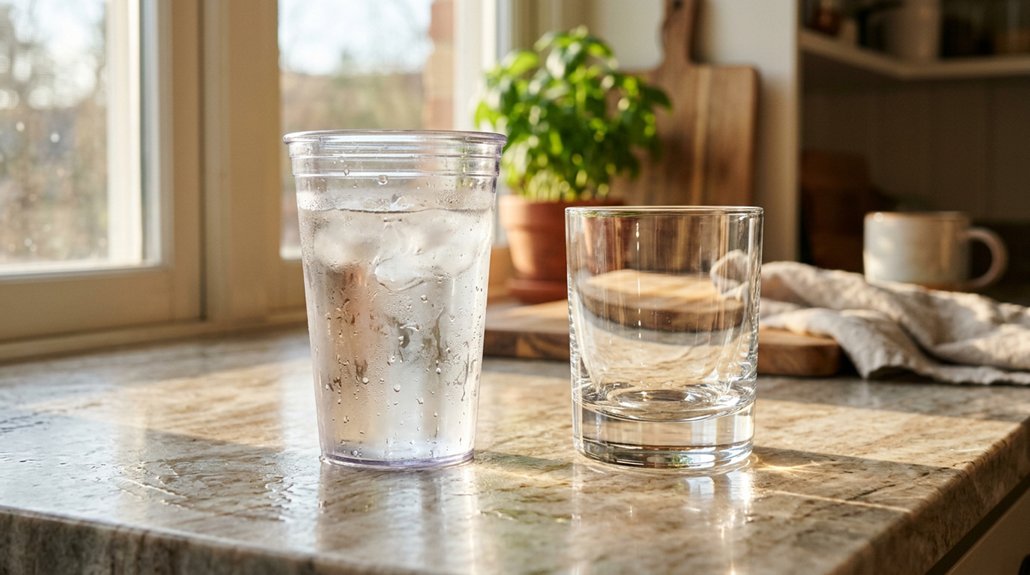
For most homes, buy BPA-free plastic tumblers over glass. They give you better value because they weigh less, survive drops, and usually cost far less than glass sets from Libbey or Duralex. A set like the Tervis 16 oz tumbler or US Acrylic Newport 20 oz stackable cups makes more sense for daily use, especially if you have kids, pets, or hard floors.
Plastic also wins on convenience. Many Tritan tumblers from Tervis, Zak Designs, and Simple Modern go in the dishwasher, resist cracks better than soda-lime glass, and stack more easily in small cabinets. If you want the stronger choice for iced coffee, water, or juice around the house, skip cheap brittle acrylic and stick with BPA-free Tritan or polypropylene.
Glass still wins in a few cases, and I would only buy it if taste and odor resistance matter more than durability. A Duralex Picardie 17.6 oz tumbler or Libbey Classic 16 oz glass feels cleaner with sparkling water, cocktails, and anything acidic, and glass does not hold onto smells the way lower-end plastic can. It is also easier to recycle, but that advantage disappears fast if you break one every few months.
For temperature control, plain glass usually falls behind. Double-wall plastic tumblers like the Tervis 24 oz insulated model keep cold drinks usable longer and sweat less on wood tables, while plain single-wall glass warms up fast and leaves condensation rings. If insulation matters most, stainless steel options like the Stanley Quencher 30 oz or Yeti Rambler 20 oz are worth buying over both plastic and glass.
If you want one simple buying answer, choose plastic for family use and glass for careful adult use. Plastic gives you the better price-to-performance ratio for most kitchens, while glass only makes more sense if you rarely drop cups and care strongly about taste purity. The trade-offs get obvious fast once you compare what actually happens in daily use.
Plastic vs Glass Tumblers: Which Is Better at Home?
For most homes, glass tumblers are the better buy if you care about clean taste, easy washing, and long-term durability.
I’d only pick plastic first for households with toddlers, pets, tile floors, or anyone who drops cups often.
A set like the Duralex Picardie 12.6 oz glasses or Libbey Classic 16 oz tumblers gives you better value than cheap plastic cups because glass doesn’t hold smells, turn cloudy, or pick up scratches that trap residue.
If you drink water, juice, iced coffee, or hot tea every day, glass feels cleaner and stays looking new longer.
Plastic still wins on safety and convenience.
The Tervis 16 oz insulated tumbler, made from BPA-free plastic, costs more than basic plastic cups but holds up well, travels easily, and works better for kids or outdoor use than thin store-brand acrylic tumblers that crack around the rim.
If you want one simple recommendation for home use, buy tempered glass, not standard soda-lime glass and not bargain acrylic.
Duralex, Bormioli Rocco, and Anchor Hocking make stronger everyday options worth buying, while very cheap plastic sets usually look tired fast and offer poor value after a few months of dishwasher wear.
Heat matters too.
Glass handles hot coffee and tea better than most plastic tumblers, especially borosilicate models like Bodum Pavina or double-wall JoyJolt glasses, which resist thermal shock better than basic kitchen glassware. Glass is also a smarter long-term pick because it is fully recyclable and can be reused without losing quality.
Plastic often claims dishwasher safety, but repeated top-rack cycles can still warp lids, dull the finish, or leave the cup smelling like yesterday’s smoothie.
If you want low-maintenance cleanup and no flavor transfer, glass is the stronger choice.
Skip glass only if breakage would be a constant headache.
In that case, buy a tougher plastic tumbler from Tervis or a Tritan model from CamelBak, because Tritan resists stains better than cheap acrylic and usually survives drops from a counter.
If style matters, glass also looks better on a table than plastic and pairs more naturally with ceramic mugs, stainless steel water bottles, and real barware.
For most adults buying tumblers for daily home use, glass is worth buying and plastic is the backup choice, not the default.
Which Tumbler Lasts Longer?
Plastic tumblers usually last longer than glass tumblers in normal daily use, and for most buyers, plastic is the stronger choice. If you want something that survives drops in the sink, falls from a car cup holder, or rough handling around kids, buy Tritan or polypropylene and skip cheap soda-lime glass.
For everyday durability, plastic wins—especially Tritan or polypropylene—while cheap soda-lime glass is far more likely to fail after drops.
A 16 oz or 20 oz Tritan tumbler from brands like Tervis, Simple Modern, or Zak Designs will usually outlast a glass tumbler simply because it doesn’t shatter on impact. That makes plastic the better value for kitchens, patios, travel, and homes where durability matters more than premium feel. Plastic also has an edge on price, with many budget-friendly options costing less than comparable glass tumblers.
Glass still wins in one area; it keeps its look longer. A borosilicate glass tumbler like a Bodum Pavina or selected JoyJolt models resists staining, odor retention, and cloudy discoloration better than most plastic cups, so it’s worth buying if you want a cleaner-looking tumbler for coffee, iced tea, or sparkling water.
For real buying advice, focus on the material, not just the word plastic. Tritan holds up far better than brittle acrylic, and polypropylene usually beats both on drop resistance, even if it feels less premium in hand.
If you’re shopping under $25, Tritan is usually the sweet spot for price-to-durability.
Care also changes how long each one lasts. Plastic tumblers often claim top-rack dishwasher safety, but repeated high-heat cycles can warp lids, dull the finish, or shorten the life of straw seals, so hand-washing usually gets you more years.
Glass can last for decades, but one hard hit on tile or granite can end it in a day.
If you want the safer buy for daily use, choose plastic. If you care more about taste, appearance, and long-term clarity, and you don’t mind handling it carefully, borosilicate glass is worth the tradeoff.
Which Is Safer for Taste and Health?
Glass is the safer choice for taste and health, and if those two factors matter most, it’s worth buying over plastic. A borosilicate glass tumbler like the Ello Syndicate 20 oz or a KeepCup Glass 16 oz gives you a cleaner drinking experience because glass doesn’t contain BPA or phthalates and won’t pick up flavors from yesterday’s coffee or lemon water. Glass is also non-porous, which helps prevent stains and lingering odors from building up over time.
Glass also handles acidic drinks better than plastic. If you regularly drink iced coffee, juice, or electrolyte mixes, glass keeps the flavor neutral and avoids the stale smell that cheaper plastic tumblers often develop after a few months.
That said, most people shouldn’t buy glass for travel. Even strong borosilicate models crack when dropped, and many glass tumblers feel heavier in a bag and less secure in a car cup holder than a stainless steel option like the Stanley Quencher 30 oz or Owala Tumbler 24 oz.
If you want the safest material for home use, glass is the stronger choice.
If you want a daily commuter tumbler with better durability, stronger leak resistance, and fewer breakage risks, skip plastic and buy stainless steel instead.
Which Keeps Drinks Hot or Cold Longer?
Plastic tumblers usually keep drinks hot or cold longer than plain glass, so if insulation matters most, plastic is the better buy. A double-wall plastic tumbler beats a standard single-wall glass cup in real use, especially for iced coffee, water, and casual commuting. This comes down largely to thermal conductivity, since insulating materials slow heat transfer more than materials that pass heat quickly.
The stronger choice at the budget end is a double-wall BPA-free plastic tumbler like the Tervis 24 oz Classic, which usually costs around $15 to $20. It insulates better than a basic glass tumbler, feels lighter in a bag, and fits more cup holders without the weight penalty.
For hot drinks, plastic slows heat loss better than regular glass, so coffee or tea stays warm longer in a double-wall design. Glass looks cleaner and often tastes more neutral, but most plain glass tumblers lose heat fast and feel hot in the hand unless they use a sleeve or a double-wall build.
For cold drinks, plastic also gives you better everyday retention, especially indoors or in the car. A plastic tumbler like the Simple Modern Classic 24 oz with a straw lid offers better value than a plain glass iced cup if your goal is to keep ice around longer and cut down on condensation.
You should still skip cheap clear plastic if you leave drinks in direct sun. It can heat up faster, hold onto odors over time, and scratch more easily than borosilicate glass options like the KeepCup Brew Cork 16 oz, which handles heat better and stays looking nicer longer.
If you want the best temperature retention, buy neither plain plastic nor plain glass. A vacuum-insulated stainless steel tumbler like the Yeti Rambler 20 oz, Stanley Quencher H2.0 30 oz, or Hydro Flask All Around Tumbler is worth buying because it keeps drinks hot or cold for hours longer, usually seals better, and gives you the best price-to-performance ratio for daily use.
Which Offers Better Cost and Eco Value?
Plastic tumblers offer the better value for most buyers, especially if you need affordable cups for kids, parties, or everyday family use.
A 16 oz to 24 oz plastic tumbler from Tervis, Simple Modern, or Zak Designs usually lands around $3 to $6 per cup in multi-packs, while comparable glass options from Libbey or Bormioli Rocco often start closer to $8 and rise fast.
If you want the strongest price-to-performance ratio, buy plastic and skip glass unless you specifically want a heavier feel and easier recyclability.
Plastic also wins on real-world convenience because it travels better, survives drops, fits more casual use, and usually costs far less to replace.
Glass only becomes worth buying if you plan to keep the cups at home, run them through the dishwasher regularly, and care more about long-term recyclability than upfront cost.
Tempered glass tumblers can last for years with careful use, but in busy homes, breakage changes the math fast. Over time, replacement rates matter more than the sticker price when you compare total ownership cost.
For replacement costs, plastic stays the stronger choice.
Most households replace about 10% to 20% of plastic tumblers per year, while glass can hit 50% to 100% in homes with kids, tile floors, or frequent entertaining.
On the eco side, glass has the better story, but only if you actually use it long enough to offset the higher production energy.
Glass recycles endlessly, while most plastic tumblers, especially mixed-material or lower-grade options, rarely get recycled into the same kind of drinkware.
My buying advice is simple.
If you want the better value, buy BPA-free plastic tumblers from proven brands like Tervis or CamelBak for daily use, and skip cheap glass unless you know they’ll stay in a low-breakage kitchen.
If eco value matters most and you mostly drink at home, tempered glass from Libbey gives you the stronger long-term case.
Frequently Asked Questions
Are Glass Tumblers Dishwasher Safe Compared With Plastic Ones?
Yes, most glass tumblers are dishwasher safe, but plastic usually makes the better buy if you want something low-maintenance and harder to ruin. Glass wins on taste and odor resistance, while Tritan plastic wins on durability, price, and everyday convenience.
If you want a dishwasher-safe tumbler that stays clear and resists smells, a borosilicate glass option like the Ello Syndicate 16 oz is worth buying. If you need something for daily travel, kids, or busy kitchens, a Tritan model like the Owala Tritan or a CamelBak Eddy+ plastic bottle is the stronger choice because it handles drops far better than glass.
Glass also needs more care in the dishwasher. Many models survive the top rack just fine, but lids, silicone sleeves, and printed finishes often wear faster than the cup itself.
Plastic tumblers, especially BPA-free Tritan, usually handle repeated dishwasher cycles with less risk of shattering. If breakage, replacement cost, and grab-and-go use matter more than pure taste, skip glass and buy Tritan.
Which Tumbler Material Is Better for Kids and Family Use?
Plastic tumblers are the better buy for kids and family use. They are lighter, harder to break, cheaper to replace, and easier for small hands to carry without turning every drop into a shattered-glass problem.
For most families, a BPA-free Tritan tumbler beats glass on everyday practicality. Models like the Owala Kids Tumbler 15 oz and Zak Designs Kelso 15 oz cost far less than insulated stainless options, fit better in smaller cup holders, and survive drops from kitchen counters or car seats.
If you want the strongest choice for younger kids, skip glass and buy plastic with a leak-resistant lid and dishwasher-safe parts. That gives you the better value, especially for school runs, travel, and daily use around the house.
Do Plastic or Glass Tumblers Work Better for Outdoor Entertaining?
Plastic tumblers are the better buy for outdoor entertaining. For most backyards, poolsides, and patios, I would pick Tritan plastic over glass because it handles drops better, weighs less, and costs less to replace if guests walk off with one.
If you want a smart default, look at 16 oz to 20 oz Tritan tumblers from brands like Tervis, US Acrylic, and Zak Designs, which usually run about $20 to $35 for a set. They stack easily, fit more outdoor table setups, and you can hand them to kids or use them near a pool without worrying about broken glass.
Glass tumblers only make more sense if presentation matters more than durability. A 16 oz Libbey drinking glass looks better on the table, but it is the weaker choice for outdoor use because it is heavier, easier to chip, and a pain to replace after one bad drop.
The main downside with basic plastic is poor insulation, so skip thin acrylic if you serve iced drinks in the sun. If cold retention matters, insulated stainless options like the YETI Rambler 20 oz Tumbler or Stanley Quencher H2.0 30 oz are worth buying instead, especially if you want better temperature hold, cup holder compatibility, and dishwasher-safe durability.
Which Tumbler Is Easier to Store in Small Kitchen Cabinets?
Plastic tumblers are the easier choice for small kitchen cabinets, and for most buyers they are the better value if storage matters. A simple 16 oz or 24 oz plastic tumbler from Tervis, CamelBak, or Zak Designs nests tighter than a comparable stainless steel Stanley Quencher or Yeti Rambler, so you waste less shelf space.
They also stack more cleanly because the walls are usually thinner and the lids store flatter. If you keep multiple cups in a narrow cabinet, a plastic set like the Tervis 24 oz tumblers is worth buying over bulky handled stainless options that eat up vertical space.
I would skip oversized stainless tumblers for small cabinets unless you need long ice retention or a leak-resistant travel lid. A 30 oz Stanley Quencher H2.0 or 35 oz Yeti Straw Mug gives you better insulation, but they are much harder to nest, the handles block tighter storage, and the wide bases do not use awkward shelf gaps well.
Can Plastic or Glass Tumblers Be Customized or Personalized Easily?
Yes, plastic tumblers are easier to customize, and they are the better buy if personalization matters most. Plastic gives you more print methods, lower setup costs, and more freedom for logos, names, full-wrap graphics, and event orders than glass.
Brands like Tervis, CamelBak, and many stadium cup makers offer BPA-free plastic tumblers in 16 oz, 20 oz, and 24 oz sizes that work well with silkscreening, UV printing, hot stamping, and full-color wraps. That makes plastic the stronger choice for team gifts, wedding favors, business merch, or bulk orders where price matters and you want clean, durable branding.
Glass tumblers can look more premium, but customization usually stays limited to etching, laser engraving, or a single uploaded design. If you want a higher-end feel for a whiskey glass or a simple iced coffee tumbler, glass is worth buying, but for easy personalization and better value, plastic wins.
Conclusion
For most homes, plastic tumblers make more sense as the default buy. A durable Tritan cup like the Tervis 16 oz Tumbler or US Acrylic 20 oz Newport gives you better drop resistance, lower replacement cost, and less stress around kids, pets, and patios.
Glass still wins for taste, looks, and long-term clarity, so I would not skip it completely. If you drink iced coffee, juice, or cocktails and care about how the drink tastes and looks, a Libbey 16 oz Drinking Glass or Duralex Picardie 17.62 oz is worth buying over cheap plastic.
Plastic is the stronger choice for daily water and busy kitchens because it survives falls, weighs less, and usually costs less per cup. The tradeoff is real, cheaper plastic scratches faster, can hold odors, and starts looking cloudy after heavy dishwasher use.
Glass is the better pick if you want a tumbler that stays clear, does not absorb smells, and feels better in the hand. The downside is obvious, it breaks, weighs more, and makes less sense for small kids or hard tile floors.
My actual buying advice is simple. Buy a set of plastic tumblers for everyday use, then add a smaller set of glass tumblers for coffee, juice, guests, and any drink where presentation matters.