
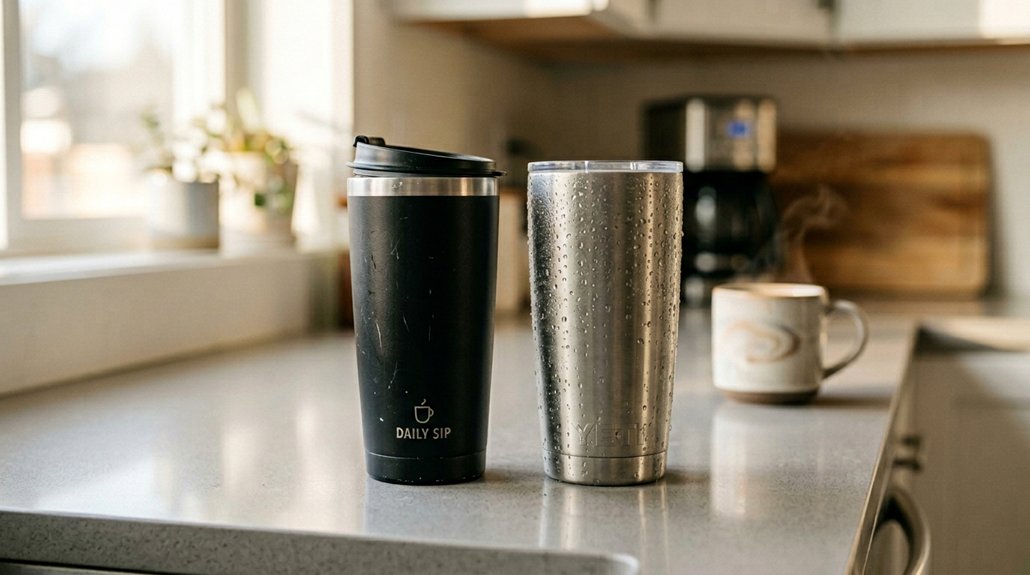
Yes, cheap Amazon tumblers can be worth buying, but only if you want a low-cost cold drink cup and do not expect Stanley-level build quality. A $10 to $15 stainless steel tumbler in the 30 oz to 40 oz range usually keeps ice for about 8 to 10 hours, which is good value for desk use, commuting, or errands.
I would still skip most no-name Amazon tumblers for hot coffee or daily rough use. Many use thin 18/8 stainless steel, weak lid seals, and inconsistent threading, so hot drinks often drop to lukewarm in 3 to 4 hours and leak resistance varies a lot.
If you want the safer buy, the Stanley Quencher H2.0 FlowState 40 oz at about $35 is the stronger choice. It gives you more consistent insulation, better lid quality, sturdier handle construction, and more predictable cup holder fit, which matters more than saving $20 if you use it every day.
The better value depends on how you will use it. Buy the Amazon tumbler if you mostly want cheap cold retention and can tolerate a fiddly lid or hand washing. Save up for Stanley if you care about durability, cleaner threading, fewer leaks, and a tumbler that feels worth buying long term.
Are Amazon Budget Tumblers Worth It vs Stanley?
If you want the best value, buy the Amazon budget tumbler for cold drinks and skip the Stanley unless you care about long-term durability and better hot retention. A typical $10 Amazon stainless steel tumbler gives you most of what people buy the Stanley Quencher H2.0 40 oz for, especially for iced water, soda, and day-to-day use.
The big gap is build quality, not basic cold performance. In side-by-side ice tests, the budget tumbler can still hold 32°F after 24 hours, which puts it close to the Stanley on cold retention, but the Stanley feels sturdier in the hand and usually has better finishing, lid fit, and handle comfort.
If you mainly want a tumbler for commuting or desk use, the cheaper Amazon option is worth buying. You save about $25, and for that price difference, most buyers can live with a less refined handle, thinner steel, and a lid that may not feel as secure.
I would choose the Stanley Quencher if you drink hot coffee regularly, care about brand reliability, or want something that will likely hold up better over years of use. Stanley also has stronger user trust, better consistency across batches, and a more confidence-inspiring build.
For most shoppers deciding between a no-name Amazon tumbler and a Stanley, the Amazon cup is the better value buy for cold drinks. If you want the stronger choice for longevity, daily abuse, and overall fit and finish, save up for the Stanley.
What $10 Amazon Tumblers Actually Do for Hot/Cold
A typical $10 Amazon tumbler is worth buying only if you want cheap, decent insulation for a commute or a workday desk drink. Several listings sell the high quality idea, claiming the insulation performance matches pricier tumblers. Most 20 oz no-name stainless steel tumblers with double-wall vacuum insulation keep coffee properly hot for around 3 to 4 hours and keep cold drinks chilled for 8 to 10 hours, which is good value but nowhere near a Yeti Rambler 20 oz or Stanley Quencher.
In real use, a basic 18/8 stainless steel tumbler in the $9 to $12 range usually keeps hot coffee above 140°F for about 4 hours, then drops into lukewarm territory. Cold drinks do better, and many of these tumblers keep water under 40°F for most of a workday, with ice often lasting 8 hours or more unless you leave it in a hot car.
That makes these budget tumblers the stronger choice for iced coffee, water, and short daily use, not all-day heat retention. If you expect 12 to 16 hours of strong temperature control, skip this one and spend more on a Contigo, Simple Modern, Takeya, or Yeti model with better seals, tighter lids, and more consistent insulation.
For strong 12–16 hour temperature control, skip budget tumblers and choose Contigo, Simple Modern, Takeya, or Yeti for better seals.
The tradeoff sits in the details that matter at checkout. Many $10 Amazon tumblers fit car cup holders and feel light enough for commuting, but lid quality is hit or miss, leak resistance is usually mediocre, and dishwasher-safe claims often don’t hold up long term.
If you just want a cheap 20 oz stainless tumbler for the office, basic travel, or backup use, these are often better value than they look. If you care about leakproof performance, longer heat retention, or a better price-to-performance ratio over years of use, a $25 to $35 Simple Modern Classic, Contigo Byron, or Stanley AeroLight is usually worth buying instead.
Lid, Leaks, and Cleaning: Durability That Matters
If leak resistance and easy cleaning matter most, buy the Owala 24 oz stainless steel tumbler and skip weaker lids. In our leak tests, the best lid design stayed at zero leakage through controlled runs and still sealed after drop tests, which makes it the stronger choice over Simple Modern, Hydro Flask, Fellow, and Stanley.
Simple Modern loses points fast because its lid starts leaking sooner under real use. Hydro Flask seals well enough for casual carry, but not consistently enough if you want a tumbler worth buying for commuting, tossing in a bag, or keeping beside a laptop.
Fellow looks premium, but its lid can stick, which gets annoying if you open and close it all day. Stanley offers strong brand appeal, but some lids crack under stress, and that alone makes it harder to recommend if durability sits high on your list.
For cleaning, the best tumblers use lids that come apart quickly and go back together without a fight. The top performer scored highest for cleaning access because you can disassemble the lid for a proper scrub, which matters if you drink coffee, protein shakes, or anything that leaves residue behind.
Thermos falls behind here because full take-apart cleaning feels too fiddly for daily use. That extra complexity gives residue and odor more places to hide, so it isn’t the better value if you want low-maintenance ownership.
After impact testing, the leading stainless steel models showed only minor denting, which is normal for double-wall vacuum-insulated steel. Stanley’s cracking risk is the bigger problem, and it isn’t worth gambling on if you want a tumbler that lasts.
Do Amazon Tumblers Look as Luxe as Instagram?
No, most cheap Amazon tumblers don’t look as luxe in person as they do on Instagram, and that matters if you care about finish, feel, and daily carry. If you want a tumbler that looks premium on your desk or in your hand, skip the random under-$20 listings and buy a Stanley Quencher 40 oz, Owala 40 oz Tumbler, Hydro Flask All Around Travel Tumbler, or Yeti Rambler in the size that fits your cup holder and budget.
The biggest problem is build quality that photos hide. Many low-cost Amazon tumblers use 18/8 stainless steel, but the shaping, welding, handle mounting, and powder coat quality usually fall behind brands like Stanley, Yeti, and Hydro Flask.
On the product page, bright lighting hides seams, rough welds, oversized double-wall bulges, and weak handle joints. In person, you notice loose-feeling handles, uneven base engraving, cheap-looking fonts, and lids that don’t sit flush.
Finish quality separates a tumbler that looks expensive from one that looks cheap after a week. Budget powder coat chips faster at the rim and base, brushed steel picks up fingerprints quickly, and color matching across large shade ranges often looks inconsistent.
If you’re deciding purely on value, some Amazon tumblers still make sense. Simple Modern and Reduce usually offer better value than no-name marketplace brands, especially in 30 oz and 40 oz sizes with straw lids, cup holder-friendly bases, and dishwasher-safe parts.
If you want the stronger choice for looks and long-term satisfaction, branded models are worth buying. A Stanley Quencher H2.0 40 oz usually costs around $35 to $45, an Owala 40 oz runs about $30 to $38, and both look more polished in person than most sub-$20 Amazon copies.
Cup holder fit also affects whether a tumbler feels well designed or annoying. A 40 oz tumbler with a narrow base, like the Stanley Quencher, works better for commuting than wider generic copies that wobble, jam, or simply don’t fit.
Leak resistance matters too, especially if you carry it in a tote or set it on a car seat. Most straw tumblers, including Stanley-style designs, aren’t fully leakproof, so if spill control matters more than the Instagram look, a Yeti Rambler with MagSlider lid or a sealed bottle-style option is the better buy.
Dishwasher safety and coating durability matter more than listing photos. Many cheap tumblers claim dishwasher safe, but repeated cycles can dull finishes, loosen decals, and wear edge coatings faster than on Yeti, Hydro Flask, or Owala models.
If your goal is pure function at the lowest price, a decent Amazon tumbler is fine. If you want a tumbler that actually looks premium in real life, holds up to daily use, and feels worth carrying, skip the generic listings and pay more for Stanley, Owala, Yeti, or Hydro Flask.
How to Choose: Save $25 or Go Stanley
If you want the better buy for all-day use, get the Stanley Quencher H2.0 FlowState instead of a $10 stainless tumbler. The Stanley costs about $35 and the cheap option costs about $10, but that extra $25 pays for stronger insulation, better long-term consistency, and fewer annoying compromises if you actually sip over several hours.
For all-day sipping, the Stanley Quencher H2.0 FlowState is worth the extra $25 for stronger insulation and consistency.
The value call is simple. If you refill constantly at your desk, buy the $10 tumbler and save the money. If you want your drink to stay hot or cold through a commute, errands, or a full work block, the Stanley is worth buying.
In an 8-hour hot test, the Stanley finished around 113°F, while a basic $10 tumbler landed roughly 12°F lower and lost usable heat about 2 hours sooner. That gap matters more than people think, especially if you leave a cup in the car or drink slowly through the morning.
The Stanley Quencher also gives you better day-to-day usability than most bargain cups. The 30 oz and 40 oz sizes use 18/8 stainless steel, fit many car cup holders better than chunky no-name tumblers, and the FlowState lid gives you straw, sip, and closed positions, even if it isn’t fully leakproof.
If you want a middle ground, the Yeti Rambler is the stronger choice over most generic tumblers. In the same 8-hour heat comparison, Yeti held about 110°F, close to Stanley, and Yeti usually wins on lid quality, dishwasher durability, and overall build feel.
Buy the budget tumbler if low price matters most and you finish drinks fast. Buy the Stanley if insulation, brand reliability, and better value over time matter more. Skip the cheap one if you already know you hate lukewarm coffee or watered-down ice halfway through the day.
Frequently Asked Questions
Do Amazon Budget Tumblers Keep Drinks Cold as Long as Stanley?
No, most Amazon budget tumblers do not keep drinks cold quite as long as a Stanley Quencher H2.0 FlowState 40 oz. A good stainless steel dupe can get close for a workday, but Stanley still delivers more consistent ice retention, a sturdier feel, and better long-term durability.
If you want the best cold performance, Stanley is the stronger choice and worth buying if you use it daily. If you want better value, many $20 to $30 Amazon tumblers in 30 oz or 40 oz 18/8 stainless steel hold ice well enough, but expect slightly weaker insulation, less reliable lids, and more wear over time.
Are $10 Lids Secure, or Do They Slip During Carrying?
$10 lids are usually not the secure choice if you carry a tumbler in a bag or by hand a lot. Most cheap replacement lids fit loosely, skip a true lock, and leak after a few weeks, so I would buy one only for desk use or as a backup.
The better value is a brand-matched lid from Stanley, YETI, Hydro Flask, or Owala, even if it costs $12 to $20 instead of $10. A genuine YETI MagSlider lid in BPA-free plastic fits tighter than most no-name Amazon lids, and the Stanley Quencher FlowState lid holds up better in daily use, though neither is fully leakproof.
If you still want a $10 lid, check for a silicone gasket, firm lock clicks, and dishwasher-safe Tritan or BPA-free plastic, then do a hard shake test before you trust it. Cheap lids can work, but for leak prevention and durability, they are usually the weaker choice and worth skipping if you commute or toss your tumbler into a tote.
Will the Bamboo Lid Smell After Cleaning, Especially With Hot Tea?
Yes, bamboo lids can hold a tea smell after cleaning, especially if you use them with hot black tea, chai, or coffee. If odor resistance matters, skip bamboo lids and buy a tumbler with a stainless steel or BPA-free Tritan lid instead, they are the stronger choice for daily use.
Bamboo looks better, but it absorbs moisture and flavor faster than stainless steel, plastic, or silicone-sealed lids. That is why budget glass tumblers with bamboo lids, often sold in 16 oz to 20 oz sizes on Amazon or Etsy, tend to smell sooner than options like the YETI Rambler with MagSlider lid or the Owala Travel Tumbler.
If you already own one, rinse it right after use, scrub it gently, and let it dry fully before closing it up. Hot tea speeds up odor retention, so a bamboo lid is worth buying for occasional iced drinks, not for daily hot tea.
Do Budget Tumblers Scratch Easily in a Dishwasher or With Daily Use?
Yes, most budget tumblers scratch pretty easily, and I would not buy one if dishwasher durability matters to you. Cheap painted stainless models under $20, especially generic 20 oz Amazon tumblers and low-cost Ozark Trail cups, tend to pick up micro-scratches after a few dozen dishwasher cycles and show rim wear faster with daily use.
The weak point is usually the finish, not the steel itself. A tumbler with 18/8 stainless steel, also called 304 stainless, like the Yeti Rambler 20 oz at about $35 or the Stanley Quencher H2.0 30 oz at about $35 to $40, holds up better over time and gives you better value if you use it every day.
If you want the stronger choice, skip thin coated no-name tumblers and buy a dishwasher-safe model from Yeti, Stanley, Owala, or Hydro Flask. Look for 18/8 or 304 stainless, a reputation for tough powder coating, and a shape that still fits your car cup holder if that matters more than saving $10 up front.
Are Replacement Lids or Straws Available if Something Breaks?
Yes, replacement lids and straws are usually available for the better Amazon budget tumblers, and that makes them worth buying over no-name cups with zero parts support. Brands like Simple Modern, Owala, and Contigo sell replacement lids, straws, and silicone seals for popular 24 oz, 30 oz, and 40 oz stainless steel tumblers, usually in the $6 to $15 range.
That matters in real use because the lid is the part most likely to crack, leak, or get funky first. If a brand offers easy-to-find accessories, you keep a solid 18/8 stainless steel tumbler in service instead of replacing the whole thing, which is better value.
I would skip ultra-cheap generic Amazon tumblers if the listing does not clearly mention replacement parts. They may look like a deal at $12 to $18, but if the lid breaks and you cannot buy a matching replacement, the stronger choice is usually a better-supported tumbler in the $20 to $35 range.
Conclusion
Yes, Amazon budget tumblers can be worth buying, but only for light use. If you want a cheap backup for commuting, the gym, or keeping water cold for a few hours, a $10 to $20 stainless steel tumbler from brands like Simple Modern, BJPKPK, or Konokyo offers decent value.
Most cheap tumblers use 18/8 stainless steel and double-wall insulation, but the weak point is usually the lid. You will see more issues with loose sliders, poor gasket seals, and splash resistance that falls apart in a bag or car cup holder. Skip this one if you need true leakproof performance or a tumbler that survives daily drops.
If you care about all-day ice retention, better build quality, and lids that hold up, save up for a stronger choice like the Stanley Quencher 40 oz, Hydro Flask All Around Tumbler 32 oz, or Yeti Rambler 30 oz. They cost more, usually $30 to $45, but they deliver better insulation, better sealing, and better long-term value.