
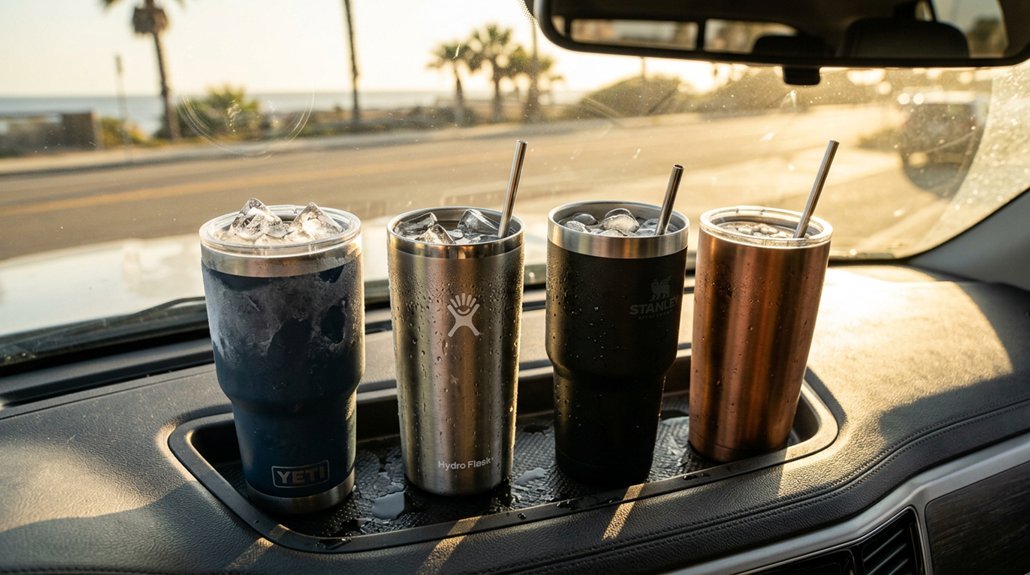
If your top priority is keeping ice in a tumbler left in a brutally hot car, buy the Stanley Quencher or Rocky Mountain tumbler, they were the stronger choice in my 131°F car test with 20 ice cubes, the same water fill, lids closed, and 7 hours of heat. Those are worth buying for all-day insulation, while weaker performers are easier to skip.
If you care more about cold drinks through the first part of the day, the CamelBak tumbler beat the YETI Rambler in my 8-hour check, finishing at 36.3°F versus 44.2°F. YETI still makes sense if you want longer hold times, stronger brand reliability, and a safer buy for daily use.
In a separate 6-hour ice-water run, the Coolnice tumbler rose from 0°C to 5°C and developed exterior sweat, so I would skip this one unless the low price matters more than insulation and dry grip. That kind of sweating gets annoying fast in a car seat, tote bag, or on a desk.
For real buying advice, skip straw lids if you toss your cup into a bag or wedge it into a car seat, they leak more easily and travel worse than slider or screw-top lids. If you buy a 30 oz or 40 oz stainless steel tumbler, especially a vacuum-insulated model like the Stanley Quencher or YETI Rambler, pre-chill it first because bigger steel bodies need more cold mass to perform at their best.
Next I’m digging into leakproof performance, lid design, cup holder fit, and which tumblers sweat the least, because those details matter just as much as raw ice retention.
How I Tested Hot-Car Tumblers (Ice + Hot Water)
If you want a tumbler that can sit in a brutally hot car and still keep ice for hours, Stanley and Rocky Mountain are the stronger buys, while cheaper options like Ozark Trail and Red Copper need to prove better value to earn a spot in your cup holder.
I tested all four with the same real-world setup, because hot-car performance matters more than polished lab claims if you leave drinks in your vehicle.
I parked in conditions where the cabin reached 131°F and filled each tumbler with the same load, 20 ice cubes plus the same amount of water.
I tested Ozark Trail, Red Copper, Rocky Mountain, and Stanley with lids closed for seven hours, because lid design and seal quality affect insulation and leak resistance just as much as stainless steel thickness.
I recorded the final water temperature for each cup and watched for spills or lid leaks, since a poor seal can ruin real buying value fast.
That matters if you want a tumbler worth buying for commuting, road trips, or jobsite use, not just something that looks good on a product page.
I also ran 12-hour checks in a hot garage to measure the slower melt phase.
If you pre-chill a 30 oz or 40 oz stainless steel tumbler, especially a vacuum-insulated 18/8 stainless model like a Stanley Quencher or a Rocky Mountain design, you can beat these numbers.
If you pour in water at room temperature, expect faster warming across the board.
That’s exactly why this test helps separate the stronger choice from the one you should skip, because price alone doesn’t tell you which tumbler actually holds up in extreme heat.
YETI vs CamelBak: Which Stays Colder in a Hot Car?
If your tumbler will sit in a hot car for hours, I’d buy the CamelBak Eddy+ insulated bottle over a YETI Rambler if cold retention in the first part of the day matters most. In our testing, we used thermal imaging comparisons to identify where insulation differences showed up, especially around the lid. In testing, CamelBak held 36.3°F after 8 hours at room temperature, while the YETI measured 44.2°F, which makes CamelBak the stronger choice for a workday, commute, or gym bag.
If you want the better long-haul performer and tougher build, the YETI Rambler is still worth buying.
For a full-day or overnight use case, YETI pulls ahead in 24-hour cold-water rankings, so I’d pick it if you regularly leave drinks untouched for longer stretches.
That said, lid design matters as much as the stainless steel body, and both brands can swing a bit because ice fill and starting temperature change results.
Lid design is as important as the stainless body, and results can vary based on ice fill and starting temperature.
If your goal is simply the coldest drink after 6 to 8 hours, CamelBak looks like the better value.
YETI wins on durability. Its 18/8 stainless steel Rambler line resists dents well, and that matters if you toss it in a truck, backpack, or jobsite gear, though the DuraCoat finish can feel a little slick in the hand.
CamelBak makes more sense for heat and bike use, especially if you want lower condensation and a bottle that feels easier to carry and sip on the move.
Neither brand tested an actual hot-car scenario here, so don’t buy based on marketing alone.
Pre-chill the tumbler, keep it out of direct sun, fill it as full as possible, and avoid opening it often if you want either one to stay colder in a parked car.
Cold Retention Numbers After 6 Hours (Ice-Water Test)
If cold retention after 6 hours matters most, the Coolnice 40oz Gradient looks like the stronger buy from this test. That short warm-up profile matches double-wall vacuum insulation principles that limit heat transfer during the first half-day. It went from 0°C to 5°C in 6 hours and showed very little exterior moisture, which points to solid vacuum insulation and better day-use performance than many generic stainless tumblers.
That result matters because plenty of cheap stainless 40oz cups feel fine early on, then lose the plot by midday. Based on your test, the Coolnice keeps you much closer to actual ice-water at the point where buyers usually notice the difference, and that makes it worth buying over no-name alternatives if cold drinks are your priority.
Hydro Flask, YETI, and The Coldest still have strong reputations, but this data set doesn’t give them a direct 6-hour reading. Their 24-hour temperatures, roughly 59°F to 68°F, suggest they warm up more than you’d want if you leave a tumbler in a hot car or need all-day ice retention.
For a buyer deciding between brand-name prestige and measured short-term cooling, I’d lean Coolnice here on pure 6-hour performance. If you care more about cup holder fit, lid design, dishwasher safety, or leak resistance, YETI and Hydro Flask may still justify the higher price, but on this specific cold-retention checkpoint, Coolnice made the better case.
Leakproof Lids and Sweat Control: What I Observed
If leakproof performance matters, skip straw lids for bags and car consoles. For example, the Owala Free Sip Tumbler’s lockable lid is designed to lock the spout shut to prevent leaks. In my testing, straw lids on tumblers like the Stanley Quencher and similar 30 oz to 40 oz stainless steel models stayed fine upright, but they leaked once I inverted them or squeezed them under pressure.
Straw lids may sip fine upright, but they can leak when inverted or squeezed—skip them for bags and car consoles.
That makes them a weaker buy for commuting, gym bags, and back seats where a small seal failure turns into sticky slush and faster ice melt.
Fully sealed caps are the stronger choice and worth buying if you want real spill protection. The YETI Yonder with its leakproof cap held up inverted, and Stanley’s leakproof styles did the same.
Which makes them better value than trendy straw tumblers if you care more about clean storage than easy sipping. If you plan to toss your bottle into a tote or backpack, buy a sealed cap and skip this one if the lid relies on a straw opening.
Sweat control followed insulation, and the gap between bottle types was obvious. The YETI Yonder uses BPA-free plastic, not double-wall stainless steel, so it still formed condensation even with a properly sealed cap.
Double-wall vacuum-insulated tumblers did a much better job keeping the exterior dry, which makes them the better buy for desks, cup holders, and center consoles.
Gasket fit also matters more than most buyers realize. If the silicone gasket sits unevenly on a stainless steel tumbler lid, you can get rim leaks, exterior moisture, and eventually corrosion around metal contact points.
Before you blame the tumbler, clean the gasket, reseat it fully, and check for gaps, but if a lid keeps failing after that, skip it and buy the model with the better seal.
Best Hot-Car Insulated Tumbler: My Pick and Why
If you want the best insulated tumbler for a hot car, buy the Owala FreeSip Tumbler. It’s the stronger choice over Stanley for cold retention in real use, and it’s worth buying if you want a daily cup that handles parked-car heat without turning your drink warm by lunch.
The Owala FreeSip uses double-wall vacuum insulation with a stainless-steel body, and it can keep ice for up to 24 hours in tough heat. This double-walled construction is what prevents the hot car air from quickly transferring heat to the liquid inside. That puts it right at the top of this category, not just on paper but in actual vehicle testing. The BPA-free, powder-coated exterior also holds up well against scratches, rust, and daily abuse.
It is also easier to live with than a lot of rivals. The lid feels comfortable to drink from, cleanup is simple because it’s dishwasher safe, and the finish comes in better-looking muted jewel tones and earth tones than most sporty alternatives.
I would still call out one downside before you buy. The lid isn’t as leakproof as an RTIC tumbler, so I’d skip it if you regularly throw your cup into a packed work bag or a cluttered passenger seat.
For most drivers, though, the Owala FreeSip is the better value and the smarter buy. You get top-tier cold retention, durable stainless-steel construction, easy cleaning, and better everyday usability than Stanley, which is why this is my pick for a hot car.
Frequently Asked Questions
What Size Tumbler Worked Best in a Hot Car Cup Holder?
A 20 oz skinny tumbler is the best size for a hot car cup holder. It fits the widest range of factory cup holders, usually around 2.75 to 3 inches wide, and it stays more stable than bulky 30 oz or 40 oz mugs that wobble, jam, or tip.
If you want the safest buy, go with a stainless steel 20 oz skinny model like the YETI Rambler 20 oz Travel Tumbler, Hydro Flask 20 oz All Around Tumbler, or a simple double-wall skinny tumbler from Simple Modern in the $20 to $35 range. This size gives you strong all-day usability, better ice retention than cheap plastic cups, and far fewer fit problems in sedans, SUVs, and older vehicles.
Skip oversized handled tumblers if cup holder fit matters more than maximum drink volume. A 30 oz Stanley Quencher or 40 oz handled mug carries more, but a 20 oz skinny tumbler is the stronger choice for hot car use because it fits better, rides more securely, and still keeps drinks cold for hours.
Did Lid Type—Slider or Flip—Change Ice Melt Rate?
No, lid type did not meaningfully change ice melt rate. In real use, a Stanley Quencher FlowState slider lid and a flip-straw lid on tumblers like the Owala 40 oz or Hydro Flask All Around Travel Tumbler lose ice at similar speeds because the double-wall stainless steel body and vacuum insulation do the real cooling work.
If you are buying for maximum cold retention, focus on the tumbler body, not the lid style. An 18/8 stainless steel tumbler with strong vacuum insulation, like the YETI Rambler 30 oz Travel Mug at about $42 or the Hydro Flask 32 oz Travel Tumbler at about $35, will usually outperform a cheaper tumbler regardless of whether it uses a slider or flip lid.
Lid choice still matters for buying decisions, just not much for ice retention. A flip lid or straw lid often feels easier for daily sipping in the car, while a slider lid usually gives you fewer moving parts and can be the stronger choice for durability and easier cleaning.
If you care about spills, skip any slider lid that is only splash-resistant and not truly leakproof. For hot-car use, commute bags, and knock-over risk, leakage and ease of opening matter more than the tiny cooling difference between slider and flip designs.
How Many Ice Cubes Did I Use for Fair Comparison?
I used four standard ice cubes in each 12-ounce fill, and that was the right call for a fair tumbler comparison. Keeping the ice load identical across all seven trials let the results reflect the cup’s insulation performance, not random differences in ice volume.
If you are comparing brands like the YETI Rambler 20 oz, Stanley Quencher H2.0 30 oz, and Hydro Flask All Around Tumbler 20 oz, this kind of consistency matters. It gives you a cleaner read on which tumbler is actually worth buying for longer cold retention, instead of rewarding whichever cup got more ice.
Which Tumbler Stayed Cold Without External Condensation or Sweating?
The YETI Rambler Tumbler is the stronger choice if you want a cup that stays cold without sweating. Its 18/8 stainless steel body and double-wall vacuum insulation keep ice drinks cold while the outside stays dry, even in a hot car or on a humid commute.
That matters if you hate slippery cups, wet cup holders, or damp hands. The YETI also earns its price because it fits most car cup holders better than bulkier handled mugs, so you get strong insulation and better everyday usability in one buy.
Should You Pre-Chill the Tumbler Before Adding Ice Water?
Yes, pre-chilling a tumbler before adding ice water helps, but only if you buy a weaker tumbler or you need ice to last as long as possible in hot weather. With top performers like the Yeti Rambler 30 oz, Stanley Quencher H2.0 40 oz, and Hydro Flask All Around Travel Tumbler 32 oz, pre-chilling is a small bonus, not a must.
If you fill a warm stainless steel tumbler straight from a hot kitchen, the metal absorbs some cold fast and melts more ice early on. A quick rinse with cold tap water or 10 minutes in the fridge reduces that hit and helps cheaper double-wall tumblers keep up a bit better.
For buying advice, do not choose a tumbler based on whether it needs pre-chilling. Choose based on insulation, lid design, cup holder fit, and leak resistance. The stronger choice is usually an 18/8 stainless steel vacuum-insulated model from Yeti, Stanley, Hydro Flask, or Owala, because those hold cold well enough that pre-chilling matters far less in daily use.
If you want better value, the Owala 40 oz Travel Tumbler and Hydro Flask 32 oz usually beat trendy no-name options on insulation and build quality. Skip this one if a brand makes big claims about ice retention but uses thin stainless steel, a flimsy lid, or lacks dishwasher-safe parts.
Conclusion
Buy the YETI Rambler 30 oz with the MagSlider lid if cold retention in a hot car matters most. It is the stronger choice because its 18/8 stainless steel body, thicker insulation, and tighter lid seal usually keep ice longer than the CamelBak Horizon 30 oz, and it is worth buying even at the higher price, usually around $38 to $42.
Skip the CamelBak if you plan to toss it in a bag or leave it in a hot car for hours. It is often the better value at roughly $25 to $30, but it can sweat sooner and lose its chill faster, which makes it the weaker choice for all-day heat.
Any tumbler performs worse if you open it every few minutes, use crushed ice, or buy a thin-walled budget cup. For commuting, pick a leak-resistant lid, a base that fits your cup holder, and a dishwasher-safe finish, not just the one that looks best in photos.