
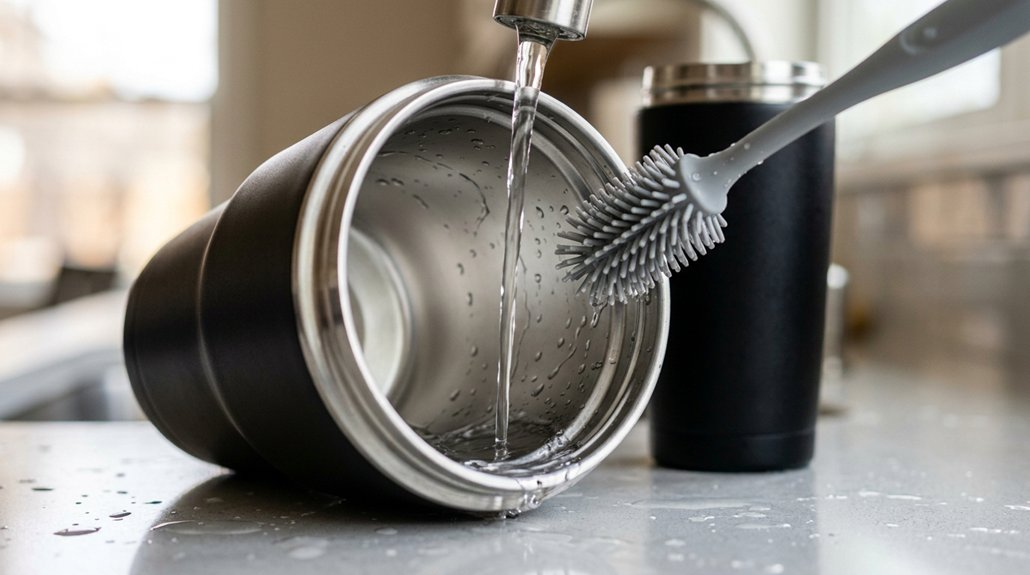
Yes, wide-mouth coffee tumblers are easier to clean, and they are worth buying if easy maintenance matters more than absolute spill resistance. Models like the Yeti Rambler 20 oz, Stanley Quencher 30 oz, and Hydro Flask All Around Tumbler all let you reach the bottom with a standard bottle brush, which makes daily coffee cleanup much faster than with narrow-neck travel mugs.
The catch is the lid. Wide mouths help with the cup itself, but lids with silicone gaskets, threaded rims, and straw channels still trap coffee oils and protein shake residue, especially on tumblers like the Stanley Quencher or any straw-lid design.
If you mostly drink water, almost any stainless steel 18/8 tumbler stays low effort. If you drink coffee, tea with sweetener, or protein shakes, buy a model with a simple dishwasher-safe lid, or skip the straw version and choose the stronger choice for cleanup, like the Yeti Rambler with MagSlider lid.
For real-world buying advice, wide-mouth tumblers beat narrow travel mugs for hand washing, but not every one offers better value. Some leak more, fit cup holders worse, or use fiddly three-piece lids that cancel out the cleaning advantage, so easy cleaning alone does not make a tumbler worth buying.
Wash coffee residue with hot water, a little dish soap, and a 10-minute soak, then air-dry the lid and gasket fully. Once a month, pull the gasket, scrub the threads, and clean under the slider or straw bend, because that hidden grime is exactly why some tumblers look good on paper but are harder to live with.
Do Wide-Mouth Tumblers Clean Easier Than Narrow Ones?
Yes, wide-mouth tumblers clean easier, and if easy maintenance matters to you, they’re usually the better buy. A wider opening lets you fit a full-size bottle brush into the cup, reach the bottom wall, and scrub the area under the rim where coffee oils, smoothie residue, and sweet-drink buildup collect fastest. With a larger opening, you can reach the bottom and side walls quickly with standard brushes.
Wide-mouth tumblers are easier to clean—fit a full-size brush, scrub under the rim, and remove coffee and smoothie buildup faster.
That is why models like the Stanley Quencher H2.0 FlowState 40 oz and Hydro Flask All Around Tumbler 32 oz feel easier to live with than narrow-neck bottles that need a skinny brush or straw tool. If you hand-wash most of the time, a wide-mouth design is worth buying because it cuts cleaning time and gives you better odds of actually getting the tumbler fully clean.
Narrow-mouth bottles still win in a few areas, especially for leak resistance and easier carrying, but they usually lose on day-to-day cleaning. You spend more time working around the neck, and even good tools like an OXO bottle brush don’t clean the shoulder area as easily as they do on a wider tumbler.
If you drink coffee, protein shakes, or anything with sugar, skip a narrow opening unless the bottle offers a strong reason like better cup holder fit or fully leakproof performance. For most buyers, a wide-mouth stainless steel tumbler with a simple lid, dishwasher-safe parts, and easy thread access is the stronger choice.
You should also check the lid design before you buy. A wide cup opening helps, but lids with multiple silicone seals, sliding covers, and straw ports still add cleanup time, which is why a simple Hydro Flask press-in lid often beats more complicated designs for ease of washing.
If you want the easiest setup to clean, look at wide-mouth stainless steel tumblers in the 20 oz to 40 oz range with 18/8 steel construction and dishwasher-safe components. Expect to pay about $25 to $45 for the better-value options from Hydro Flask, Owala, and Stanley, and that extra convenience is usually worth it if you use the tumbler every day.
Hand-Wash Wide-Mouth Tumblers Without Bottle Brushes
Yes, you can hand-wash a wide-mouth tumbler without a bottle brush, and for most buyers that’s a real advantage worth paying for. Wide-mouth models like the YETI Rambler 20 oz, Stanley Quencher H2.0 30 oz, and Owala Tumbler give you enough room to clean the inside with a sponge or dishcloth, which makes them the stronger choice over narrow-neck bottles if easy maintenance matters.
For daily coffee or tea use, fill the tumbler with hot water and a few drops of mild dish soap, then let it soak for about 10 minutes. Scrub what you can reach with a soft sponge, rinse well, and clean the lid and gasket carefully because that’s where odor and residue build up fastest. Before you put everything back together, make sure to dry completely every part so moisture doesn’t get trapped.
If you deal with coffee film or tea stains, skip buying a bottle brush first and try a simple vinegar wash. Add about 2 tablespoons of white vinegar to a half-full tumbler of warm water, seal it, shake it, dump it out, then rinse again with hot water.
For odor removal, baking soda works better than soap alone on stainless steel tumblers with silicone seals. Mix 1 teaspoon of baking soda with about 1/2 cup of vinegar, let the fizz settle, shake for 45 seconds, then rinse thoroughly and air-dry upside down.
If the tumbler still holds onto stains, use water and a spoonful of uncooked rice as a no-tool scrubber. Cap it, shake it hard, rinse well, and then leave it open to dry, because trapped moisture inside the lid can make even a premium 18/8 stainless steel tumbler smell stale.
If you know you’ll never buy a brush, a wide-mouth tumbler is absolutely worth buying over a narrow insulated bottle. Models with simple lid designs and dishwasher-safe parts, like many YETI Rambler and Hydro Flask All Around Tumblers, usually offer better value than leakier, harder-to-clean designs with straws, sliders, and hidden gasket channels.
Clean Lids and Seals (Dishwasher + Hand Steps)
Clean the lid and seal every time you deep-clean the tumbler, because that’s where odor, coffee oil, and tea stains build up fastest. Daily washing is the single most effective way to prevent mould and odours. If dishwasher safety matters to your buying decision, YETI Rambler lids are the stronger choice because YETI rates them fully dishwasher safe. Even so, hand washing the silicone seal usually gives better long-term durability than repeated high-heat dishwasher cycles.
Clean the lid and seal each deep clean—most odor and stains hide there, so hand-wash silicone for best durability.
Remove any gasket or seal first, then rinse everything in warm water and scrub the threads, grooves, and sip opening. This matters most on travel mugs with more complex lids, like the Stanley AeroLight Transit Mug or Contigo AUTOSEAL, because extra moving parts trap more residue and smell.
If the lid still holds flavor or odor, soak it for 15 to 20 minutes in warm soapy water, then rinse thoroughly. Skip guesswork with worn seals, if the gasket no longer fits tightly in its groove or keeps popping out, replace it.
To finish, pour very hot water over the parts or soak them briefly, then let everything dry for 2 to 4 hours before reassembling. Dry the pieces upside down on a rack if you can, because trapped moisture causes more odor than most buyers expect.
Remove Coffee Odors and Stains With Easy Soaks
If your stainless steel tumbler still smells like coffee after a normal wash, skip the endless scrubbing and do a hot soak first. For day-to-day residue, Dawn Ultra dish soap paired with warm-to-hot water is a reliable option. A dishwasher tablet and near-boiling water usually work better than vinegar alone, especially on 18/8 stainless models like the Stanley Quencher, YETI Rambler, Hydro Flask All Around, and Owala SmoothSip.
Drop in one dishwasher tablet, fill the cup with kettle-hot water, and let it sit for 1 hour. Rinse well and dry upside down, because trapped moisture in the lid gasket often causes the smell people blame on the cup itself.
If you want a cheaper fix, use 2 tablespoons of distilled white vinegar and hot water. Shake it with the lid on, rinse thoroughly, and let every part dry fully before you reassemble it.
For stubborn brown coffee or tea stains, vinegar and baking soda can help, but it isn’t the strongest choice. A better value fix is Dawn Ultra and a soft bottle brush, especially for powder-coated tumblers where you don’t want to get aggressive with abrasives.
If the odor lives in the lid, gasket, or straw, treat those parts separately. That matters on leak-resistant designs like the Stanley FlowState lid and Owala FreeSip, where seals hold onto smells more than the steel body does.
For the worst lid odors, Bar Keepers Friend works fast, but use it carefully and rinse very well. I’d use it on stainless interior surfaces only and skip it on painted exteriors, printed logos, and soft plastic parts if you want your tumbler to keep looking new.
If you’re shopping for a tumbler and hate odor retention, buy a model with fewer silicone parts and easy-to-remove seals. YETI Rambler lids and Hydro Flask press-in lids usually clean up easier than more complex straw lids, so they’re worth buying if low-maintenance cleaning matters more to you than all-day leak resistance.
Deep-Clean Schedule: Monthly Reset for Reusable Tumblers
If you’re choosing between tumblers, buy one that makes monthly deep cleaning easy. The stronger choice is a design with a removable silicone gasket, simple lid threads, and dishwasher-safe straw parts, like the YETI Rambler 30 oz Tumbler with MagSlider Lid, the Owala 40 oz Tumbler, or the Stanley Quencher H2.0 FlowState 40 oz. Skip any model with hard-to-remove seals or narrow straw bends, because those parts trap odor fast and turn basic upkeep into a chore.
Choose tumblers with removable silicone gaskets and dishwasher-safe straw parts—easy monthly deep cleaning beats trapped odors.
A smart monthly reset keeps insulated stainless steel tumblers worth buying for the long haul. A monthly reset also keeps upkeep realistic—think all-or-something instead of all-or-nothing—so you can stay consistent even during busy weeks. Focus on the usual problem spots, the lid gasket, rim threads, and straw components, because that’s where coffee residue, electrolyte mix, and milk-based drinks leave smell and staining behind.
Once a month, pull off the gasket, rinse the threads, and soak straw parts if they smell. Then briefly sanitize and let every part air-dry fully, because trapped moisture causes more funk than most buyers expect.
This matters more on some models than others. The Stanley Quencher H2.0 40 oz, usually around $35 to $45, performs well for cold retention and cup holder compatibility, but its lid and straw setup need more attention than a simpler YETI Rambler lid. The YETI Rambler 30 oz, usually around $38, costs a bit more than budget picks but offers better long-term value because the lid parts feel sturdier and easier to maintain.
If you have hard water, scrub and descale monthly to stop limescale from building up on stainless interiors and around lid seams. Keep a dedicated straw brush and drying towel near the sink, because easier maintenance often decides whether a tumbler stays fresh enough to use daily.
Check lids and seals while you clean. Brands with easy-to-buy replacement parts, like Stanley, YETI, and Hydro Flask, offer better value than off-brand tumblers that become trash once the gasket stretches or disappears.
If you miss a month, don’t panic. Repeat the soak, dry everything longer the following week, and get back on schedule before odors set in for good.
Frequently Asked Questions
Do Wide Mouths Prevent Residue Buildup Under Silicone Seals?
No, a wide mouth does not stop residue from building up under a silicone seal. If easy cleaning matters, skip any tumbler with a hard-to-remove gasket, because the stronger choice is a lid with fewer hidden grooves, not just a bigger opening.
Stanley Quencher lids, Owala FreeSip lids, and many generic Amazon tumblers still collect coffee film and smoothie residue under the silicone ring if you do not remove and dry it. What actually works is simple gasket care, remove it, soak it, rinse it well, and let it dry fully before reassembly.
If you want better value and less cleanup, buy a tumbler with a dishwasher-safe lid and an easy-pull seal, like the YETI Rambler 30 oz with MagSlider or a Hydro Flask All Around Tumbler with a press-in lid. They are not fully leakproof, but they are worth buying if you care more about low-maintenance cleaning than maximum spill resistance.
Are Wide Mouth Tumblers Easier to Clean When Using Ice for Cold Brew?
Yes, wide mouth tumblers are easier to clean for cold brew, and they are worth buying if you use a lot of ice. A wider opening lets you reach coffee film, melted ice residue, and the bottom corners without fighting the rim, which makes models like the Yeti Rambler 20 oz Tumbler and Hydro Flask All Around Tumbler the stronger choice over narrow travel mugs.
That said, do not ignore the lid. Even the best stainless steel tumbler will hold onto grime around the gasket and slider, so rinse it right after use and clean the seal regularly if you want your cold brew to stay fresh instead of tasting stale.
Which Materials—Stainless, Plastic, or Glass—Benefit Most From Wide Openings?
Wide openings help stainless steel tumblers the most, and that is the stronger choice if you care about easy cleaning and long-term value. Models like the Yeti Rambler 30 oz, Stanley Quencher H2.0 30 oz, and Hydro Flask All Around Travel Tumbler give you enough room to scrub coffee film, protein shake residue, and smoothie pulp without damaging the interior. That matters more on stainless because these tumblers usually cost $25 to $45, and they are worth buying only if they stay easy to clean after months of daily use.
Plastic comes second, especially on budget picks like the Simple Modern Classic Tumbler or reusable cold cups under $15. A wide opening makes it easier to remove straws, reach sticky lids, and clean silicone seals before odors build up. Still, plastic scratches faster and holds smells longer, so even with a big opening, it is usually the weaker choice next to stainless.
Glass benefits too, but I would buy it only for home or office use, not for commuting. Wide-mouth glass tumblers are easier to wash by hand, but fragility, extra weight, and weaker drop resistance make them a worse buy for most people. If you want a daily driver for the car, stainless beats glass on durability, insulation, and overall price-to-performance.
If you are comparing features, prioritize a stainless tumbler with a wide mouth, a dishwasher-safe lid, and durable gasket design. Good insulated lid design and solid gasket wear testing matter because leaks usually start at the seal, not the cup body. For most buyers, wide-opening stainless gives the best mix of cleanability, insulation, and value.
Can I Use Vinegar-Baking Soda Safely on All Lid Types and Finishes?
Yes, you can usually use vinegar and baking soda on tumbler lids, but I would only do it on stainless steel, silicone, and rubber parts from brands like YETI Rambler, Stanley Quencher, Owala FreeSip, and Hydro Flask. Those materials handle this cleaning method well, and it is worth doing if your lid smells or holds onto coffee residue. Skip this on painted finishes, soft-touch coatings, or cheap unknown plastics, because the stronger choice is a mild dish soap soak.
Take the lid apart first, especially on models with removable straw seals or rubber gaskets like the Owala FreeSip 24 oz and Stanley Quencher H2.0 40 oz. Soak the parts briefly, rinse well, then scrub with warm soapy water so you do not leave behind vinegar smell or baking soda grit. I would skip bleach completely, because it is harsher on seals and finishes and is not worth the risk for a lid you want to last.
What’s the Quickest Way to Dry Wide-Mouth Tumblers and Prevent Water Spots?
The quickest way to dry a wide-mouth tumbler and avoid water spots is to rinse it with hot water, shake it hard, and set it upside down on a raised drying rack, not flat on a towel. A simple stainless wire rack like the OXO Good Grips Foldaway Dish Rack, around $45, dries faster than a silicone mat because air can reach the rim and base at the same time.
If you want the cleanest finish on stainless tumblers like the Yeti Rambler 20 oz, Hydro Flask All Around Tumbler 28 oz, or Stanley Quencher H2.0 30 oz, skip slow air-drying on the counter. Use a hot rinse first, then do two or three firm shakes, and flip the tumbler onto a microfiber towel for 10 to 20 seconds before moving it to the rack.
For fewer spots, hard water matters more than the tumbler brand. Stainless steel bodies in 18/8 steel, like Yeti, Hydro Flask, and Simple Modern, resist staining well, but lids and straw channels still show mineral marks fast, so a quick towel finish on the lid usually gives the better result.
If you are choosing between drying accessories, buy a rack with elevated pegs or open airflow. The better value pick is a bottle drying rack like the Boon Lawn or OXO Tot Bottle Drying Rack, usually $15 to $30, because wide-mouth tumblers, straw lids, and gaskets all dry faster and more evenly on separate prongs.
Skip thick cotton towels for the final dry if you care about spots or lint. A basic microfiber glass cloth, like the E-Cloth Kitchen Pack at about $8 to $15, is the stronger choice because it absorbs leftover droplets without leaving fuzz on dark powder-coated finishes.
Conclusion
Yes, wide-mouth coffee tumblers are easier to clean, and they are worth buying if quick hand washing matters to you. Models like the Yeti Rambler 20 oz Tumbler in 18/8 stainless steel and the Hydro Flask All Around 20 oz cost about $30 to $35, and both let you reach the bottom with a normal sponge instead of fighting with a bottle brush.
The catch is the lid, not the cup body. A Yeti MagSlider lid, Stanley Quencher FlowState lid, or any tumbler with silicone gaskets and straw channels still traps coffee oils, milk residue, and syrup, so you need to pull those parts apart and wash them properly.
If you mostly drink black coffee, a wide-mouth tumbler feels like a real upgrade and the stronger choice over narrow-neck bottles. If you drink sweet lattes or protein coffee, wide-mouth still helps, but it will not save you from lid cleanup, it just makes the whole job faster.
For easy cleaning, dishwasher-safe designs offer better value than premium insulation alone. The Hydro Flask All Around and Owala SmoothSip Slider are easier to live with than a narrow-mouth bottle, while the Stanley Classic Trigger-Action Travel Mug is worth skipping if your top priority is easy access for scrubbing.
Deep clean any tumbler about once a month, soak it with baking soda or denture tablets if odors build up, and dry the lid and gasket fully before reassembling. If easy cleaning ranks near the top of your buying list, wide mouth is the smarter pick.