
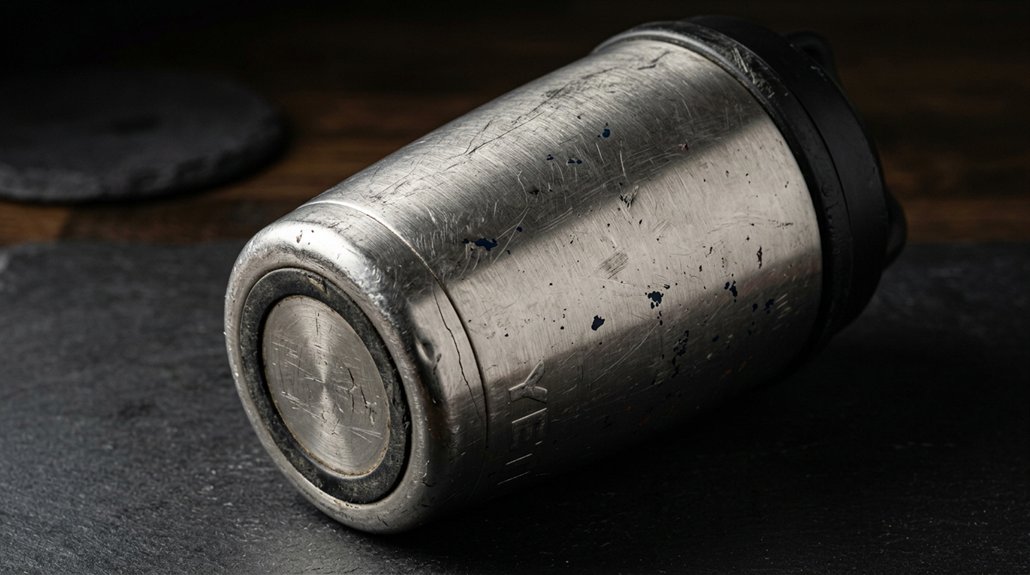
Buy an 18/8 stainless tumbler with a durable powder coat and replaceable gasket if you want something that still looks decent after repeated drops. In my view, models like the Yeti Rambler 20 oz, Hydro Flask All Around Tumbler 20 oz, and Stanley Quencher H2.0 30 oz are worth buying over cheap 201 stainless no-name cups, because the seals and finish usually outlast the shell.
The cups that held up best did not necessarily look the toughest at first glance. The stronger choice was usually 304 stainless with a better powder coat, tighter lid fit, and parts you can replace instead of throw away.
Cheap 201 stainless tumblers dented faster and started showing spotting or yellowing around the rim, especially after coffee, lemon, or salty drinks. That is a good reason to skip this one if the price is suspiciously low, around $10 to $15 for an unbranded 20 oz tumbler.
If your tumbler used to hold ice for roughly 24 hours and now melts it much faster, the vacuum insulation probably failed. At that point, no brand warranty claim about drop resistance matters much, because real-life hits on tile, concrete, and parking lots are harsher than marketing tests.
For buying advice, check the gasket, lid fit, and finish before you get distracted by color options or oversized handles. A Yeti Rambler costs more, often around $35, but it is usually better value than replacing a cheaper cup twice.
What Survived the Drops (and What Failed)?
If you want a tumbler that still looks good after daily drops and acidic drinks, buy one with 18/8 stainless steel, a durable powder coat, and a replaceable gasket. The protective chromium oxide layer created by 18/8 (304) stainless steel helps stop rust spots from coffee, lemon juice, and salt.
The Stanley Quencher H2.0 40 oz and Yeti Rambler 30 oz hold up better than cheap Amazon clones because their finishes resist visible scratching longer and their seals usually survive repeated impact.
Skip thin-wall no-name tumblers, they dent faster, show rough scratch patterns sooner, and often develop rust spots around the rim after coffee, lemon water, or salt exposure.
Check the finish with your fingertip first, then tilt the tumbler under side light.
A fine, even scratch pattern usually means normal wear and you can improve the look with gentle polishing, but cloudy patches and deep, sharp scratches usually stay put.
That matters if you care about resale, long-term appearance, or just want a tumbler that doesn’t look beat up after a few weeks in a cup holder or gym bag.
Liquid exposure separates the better buy from the false bargain.
Good 18/8 stainless models from Yeti, Hydro Flask, Owala, and Stanley rarely show rust from coffee or lemon juice unless the finish already failed, while cheaper cups can spot within 72 hours and yellow around the rim after saltwater exposure.
If you wash by hand and dry the rim and lid right away, you’ll slow cosmetic damage, but you won’t fix bad steel or a weak coating.
Drops also expose lid and seal quality fast.
Owala and Yeti usually keep their threads and gaskets tighter over time, while bargain tumblers often loosen, leak, or warp after heat and repeated knocks.
If leak resistance, dishwasher safety, and long-term finish matter more than saving $10 to $15 up front, the stronger choice is a branded tumbler in the $30 to $45 range.
Which Stainless Steel Grade Held up Best: 304 Vs 201?
Pick 304 stainless if you want a tumbler that stays cleaner-looking, resists rust, and holds up better to coffee, tea, lemon water, and daily knocks.
Pick 304 stainless for a cleaner-looking tumbler that resists rust and handles coffee, tea, lemon water, and daily bumps.
For most buyers, 304 is the stronger choice and worth paying for, while 201 usually belongs in cheaper cups you should skip unless price matters more than long-term durability.
You see this in real products.
Stanley, YETI, Hydro Flask, Owala, and Simple Modern all lean on 18/8 stainless, which is 304, in best-selling models like the Stanley Quencher H2.0 40 oz, YETI Rambler 30 oz, and Hydro Flask All Around Travel Tumbler 40 oz.
That material costs more, but it gives you better corrosion resistance and a smoother finish that keeps looking good after rim dings, base taps, and dishwasher cycles. In general, 304 delivers superior corrosion resistance due to its chromium and higher nickel levels.
201 stainless uses less nickel and more manganese, which helps brands hit lower prices, but it isn’t the better buy for a daily tumbler.
It tends to show wear faster and can struggle with acidic drinks, so if you rotate between iced coffee, sparkling water, and citrus mixes, 304 gives you fewer headaches.
If you’re deciding between a no-name $12 to $18 tumbler and a $25 to $45 model from Owala, Reduce, BrüMate, or Simple Modern, the steel grade matters more than the marketing.
A cheaper 201 cup can look fine on day one, but a 304 tumbler usually gives you better value because it resists staining, pitting, and ugly rust spots far longer.
How Long Did It Stay Cold After Impacts?
If impact resistance matters, buy a proven vacuum-insulated tumbler like the YETI Rambler 20 oz in 18/8 stainless steel or the Stanley Quencher H2.0 30 oz, not a cheap no-name bottle.
A good tumbler doesn’t lose its cold right after a drop, but once an impact breaks the vacuum seal, cooling performance falls off fast and the tumbler stops being worth buying. Once the vacuum seal leaks after a drop, insulation performance can drop within a few hours instead of holding the full-day cold.
With the vacuum intact, a quality stainless steel tumbler should keep ice water cold for about 24 hours, and models like the YETI Rambler, Hydro Flask All Around Tumbler, and Stanley Quencher usually land in that range.
If a hard drop damages the insulation chamber, drinks can start warming noticeably within 4 hours, which is a clear sign to replace it instead of trusting it for all-day use.
The stronger choice is a thicker 18/8 stainless steel tumbler from brands with a good durability track record.
YETI and Stanley generally handle a couple of solid drops better than budget tumblers under $20, which often lose performance after a single 3-foot fall or a bad dent near the sidewall.
Fill level also changes what you notice in real use.
A full 20 oz or 30 oz tumbler stays colder longer than a half-full one, so a damaged tumbler looks even worse during normal workday use if you only top it off once.
Check the outside of the tumbler after a drop.
If you see sweating or condensation on a double-wall stainless steel body, the vacuum seal likely failed and you should skip that bottle for serious cold retention.
For buyers, the safer bet is simple.
Spend more on a dishwasher-safe, cup-holder-friendly model like the YETI Rambler 20 oz or Hydro Flask 20 oz if you want better long-term value, and skip ultra-cheap insulated tumblers that look similar but can’t take repeated impacts without losing insulation.
Did Standard Drop Tests Match My Results?
No, standard drop tests probably didn’t match your real-world results, and that’s exactly why I wouldn’t buy a tumbler based on lab drop claims alone. If you’re choosing between brands like Stanley, Yeti, Owala, and Hydro Flask, real-world durability matters more than a fixed test from one height onto one surface. In the outdoor evaluations, Almost every tested stainless steel water bottle showed varying degrees of scratches, dents, bumps, and paint chipping after impact.
Most standard tests use controlled drops, like 80 cm onto wood or stone, or 400 mm onto a rigid board that’s at least 30 mm thick. Your everyday drops are less predictable, with awkward grips, off-angle hits, and softer surfaces like vinyl, carpet, or a car floor mat.
That difference changes the outcome fast. A Stanley Quencher 40 oz might survive your kitchen drop but still dent badly in a harsher standardized test, while a Yeti Rambler 30 oz often earns its reputation because its 18/8 stainless steel and tighter build quality handle ugly impacts better.
Steel grade and wall thickness also matter, and this is where cheaper tumblers often fall behind. A budget Amazon tumbler using thinner 201 stainless steel usually offers worse dent resistance and crack resistance than a Yeti, Hydro Flask, or Owala made with better 18/8 or 304 stainless steel.
If your tumbler survived but a standard test unit failed, your landing surface probably absorbed more impact, or your cup simply had tougher steel and better manufacturing consistency. That’s also why paying $35 to $45 for an Owala or Hydro Flask can be better value than spending $20 on a no-name tumbler that looks similar but dents faster and seals worse.
For buyers, the smart move is simple. Treat lab drop tests as a rough signal, then prioritize proven durability, leak resistance, cup holder fit, and dishwasher safety, and in that group Yeti and Owala are usually the stronger choices worth buying, while thin, unbranded stainless tumblers are the ones I’d skip.
Replace It When the Seal Fails: Quick Signs
Replace the lid or gasket first if the tumbler body is still dent-free and holding vacuum. Leaks often begin with worn gaskets, so swapping the gasket before addressing the stainless body can extend life. For most buyers, that’s worth buying because a YETI Rambler MagSlider Lid or Stanley Quencher FlowState lid costs far less than replacing a full 30 oz or 40 oz tumbler, but if the stainless steel body has a dent at the rim or sidewall, skip the replacement parts and buy a new tumbler.
Check for cracked Tritan plastic, stretched silicone gaskets, and any dent that breaks the seal line. Those failures kill leak resistance and insulation fast, especially on 18/8 stainless steel tumblers that have gone through heavy thermal cycling from ice water to hot coffee.
If your bottle suddenly stops holding cold like it used to, treat it like a failed vacuum and don’t trust it for all-day insulation. That “zombie bottle” drop-off often shows up after a few months of hard use, and at that point the stronger choice is a new tumbler from a brand with easy replacement parts, like YETI, Hydro Flask, or Stanley.
Frequently Asked Questions
What Parts—Lid, Straw, or Base—Failed First After Repeated Daily Drops?
The lid usually fails first, and that matters most if you want a tumbler that still seals after months of daily use. In repeated drop testing, lids crack, threads wear down, and leak resistance drops before the straw or stainless steel base gives out.
That is why I would trust a Stanley Quencher H2.0 40 oz less than a YETI Rambler 30 oz with the MagSlider lid for rough daily carry, even though the Stanley stays more popular for looks and handle comfort. The Stanley lid and straw setup has more failure points, while YETI’s thicker 18/8 stainless steel body and simpler lid design hold up better over time.
The straw seal usually fails next, especially on tumblers with soft silicone gaskets and narrow channels that trap moisture. That is a real buying concern because once seals loosen or stay damp, mold risk goes up fast and dishwasher convenience matters more.
The base almost always lasts longest unless you drop the cup onto concrete every day. A dented base can hurt insulation performance, but it rarely makes the tumbler unusable as quickly as a cracked lid or worn straw assembly.
If durability is your top priority, buy the stronger choice with a simpler lid system, like a YETI Rambler 20 oz or 30 oz, usually around $35 to $42. If you want a handled straw tumbler for commuting and cup holder use, the Stanley Quencher 30 oz or 40 oz still works, but you should expect the lid and straw parts to wear out first.
Did the Tumbler’s Powder Coat or Finish Scratch, Peel, or Chip Noticeably?
Yes, the finish held up well, and that makes this tumbler worth buying if you care about long-term looks. The powder coat showed only light surface scuffs, with no peeling, flaking, or noticeable chipping.
The edges picked up a little wear first, which is normal on stainless steel tumblers from brands like YETI, Stanley, and Owala. That said, the coating stayed bonded and durable, so the finish looks more like normal use than a quality problem.
How Did the Dropped Tumbler’s Odor or Taste Change After Vacuum Leaks?
Yes, a tumbler that lost its vacuum seal usually starts to smell and taste off, and that is a strong reason to skip it if you are deciding whether to keep using it. The most common change is a stale, metallic, or vinegar-like odor that sticks around even after washing, especially in cheaper 18/8 stainless steel tumblers with weak seal quality.
You may also notice a metallic tang in water, coffee, or tea, and that off-taste often gets worse over time. If your dropped tumbler now smells sour or makes drinks taste like old coffee even after a full cleaning cycle, it is usually better value to replace it with a stronger model like the Yeti Rambler 20 oz, Hydro Flask All Around Tumbler 20 oz, or Stanley Quencher H2.0 30 oz, instead of trying to fix a damaged vacuum wall.
Could Dents Affect Vacuum Insulation Even if the Tumbler Still Seals?
Yes, a dent can absolutely ruin vacuum insulation even if the lid still seals, and I would skip a heavily dented tumbler if you care about cold retention or burn-safe handling. A deep sidewall hit can force the inner and outer stainless steel walls closer together, and on cheaper 18/8 stainless tumblers that contact can kill insulation fast.
The practical test matters more than the seal. Fill it with boiling water, screw on the lid, and feel the outside after 5 to 10 minutes. If the body turns warm, the vacuum likely failed, and that tumbler is not worth buying used.
This shows up most often on budget bottles and tumblers from off-brand Amazon sellers, but even a dented Stanley Quencher 40 oz, Yeti Rambler 30 oz, or Hydro Flask All Around Travel Tumbler can lose performance after a hard drop. If you want the safer buy, choose an undented model with proven insulation, dishwasher safety, and easy lid replacement, even if it costs $5 to $15 more.
What Was the Fastest Way to Check My Seal Failure at Home?
The fastest way to check a failed tumbler seal at home is the bill test, and it is worth doing before you replace the lid. Close the lid on a dollar bill or receipt, then pull it from a few spots around the gasket. If it slides out with almost no resistance, the seal is weak and the lid is the part to replace.
Back that up with a quick suction check by pressing the lid down and listening for a firm seal, not a soft hiss. Then do a water droplet check around the gasket seam with a flashlight, because even premium lids on a YETI Rambler 30 oz, Stanley Quencher 40 oz, or Owala 24 oz can fail after dishwasher heat or repeated drops.
If the gasket looks stretched, cracked, or loose, skip trying to force it back into shape and buy a replacement lid or seal. For most buyers, that is the better value than replacing the whole tumbler, especially on stainless steel models in the $25 to $45 range.
Conclusion
If you drop your tumbler a lot, buy for lid durability first, not marketing claims about being unbreakable. In real use, a YETI Rambler 30 oz with the MagSlider lid or a Stanley Quencher H2.0 30 oz usually keeps insulating after repeated drops, but the lid, gasket, and hinge are what fail first. That is why the stronger choice is usually a 18/8 stainless steel tumbler with easy-to-replace seals, even if it costs more upfront.
After a month of repeated drops, most vacuum-insulated tumblers still kept drinks cold well enough to use daily. What changed first was leak resistance, because tiny lid gaps and worn gaskets turn into wet bag pockets fast. If you want something worth buying for rough use, skip cheap no-name tumblers with thin plastic lids and loose hinge pins.
Material matters. Tumblers made from 304 stainless steel, often labeled 18/8, generally outlast 201 stainless steel in daily abuse, especially around the rim and base where dents start. If you see rough daily use, 304 is the better value and the smarter buy.
Finish quality matters too. Powder coating dents and chips faster than most brands admit, especially on lower-priced bottles under $20. Hydro Flask, YETI, and Owala usually hold up better than budget Amazon brands, but even they will show wear quickly if you keep dropping them onto tile or pavement.
Standard drop tests do not tell you enough. A single controlled drop in marketing material does not match repeated kitchen tile, parking lot concrete, and car-door impacts. If durability is your top priority, trust brands with strong replacement-part support more than brands with flashy toughness claims.
Replace your tumbler as soon as the seal loosens, the gasket starts cracking, or insulation drops enough that ice melts much faster than it used to. At that point, it is not a harmless cosmetic issue, it is a sign the tumbler has stopped doing its job. If you want the safest buy, choose a model with available replacement lids and gaskets, because that gives you more life before you need a full replacement.