
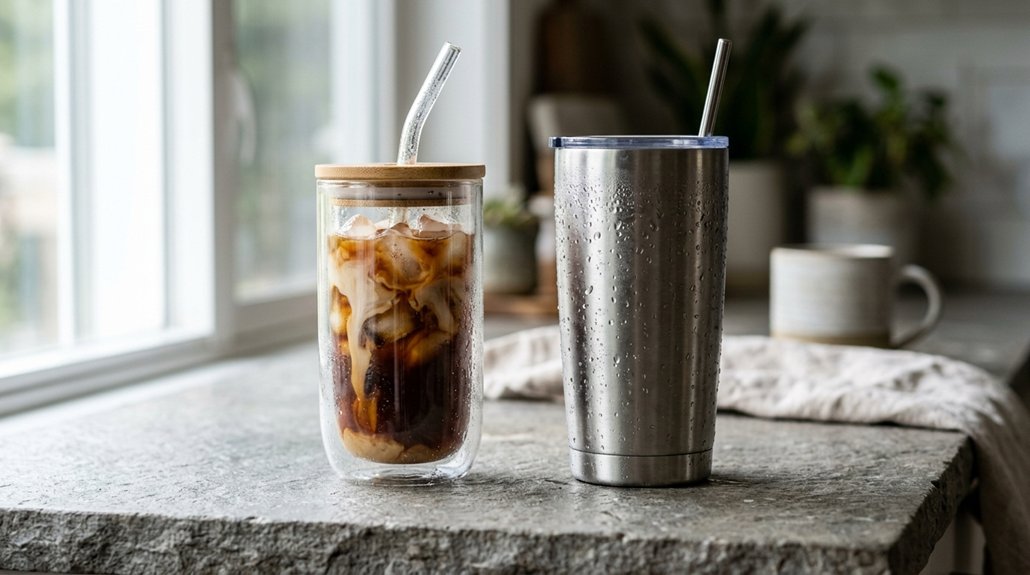
Insulated glass tumblers work, but stainless steel is the stronger choice if you care about insulation, durability, and daily convenience. If you want a tumbler that keeps coffee hot through a commute or ice solid into the next day, buy stainless steel and skip glass.
Double-wall borosilicate glass models from brands like Zwilling, Bodum, and Ello usually keep drinks warm for a couple of hours, not all day. By contrast, a 20 oz YETI Rambler, Hydro Flask All Around Tumbler, or Stanley Quencher uses vacuum-insulated 18/8 stainless steel and can hold heat for 6 to 12 hours and cold for up to 24, depending on the lid and how often you open it.
Glass still has a place if taste and looks matter more than max performance. A Zwilling Sorrento Plus or Bodum Pavina feels cleaner for coffee and tea, looks better on a desk, and usually costs around $20 to $35, but you give up drop resistance, leakproof security, and all-day insulation.
For most buyers, stainless steel gives better value and fewer compromises. You get better cup holder compatibility from models like the 30 oz Stanley Quencher or 20 oz Hydro Flask, better lid options, more dishwasher-safe picks, and a much lower chance of cracking if you carry it every day.
Do Insulated Glass Tumblers Work as Well?
Yes, insulated glass tumblers work, but they don’t match a good stainless steel tumbler for heat retention or all-day ice. If you want the best insulation for commuting or long workdays, skip insulated glass and buy a stainless model like the Yeti Rambler 20 oz, Hydro Flask All Around Tumbler 20 oz, or Stanley Quencher 30 oz. If you care more about taste, a cleaner sipping feel, and a dry exterior at your desk, an insulated glass tumbler is still worth buying.
Most double-wall borosilicate glass tumblers keep coffee or tea pleasantly warm for a few hours, not most of the day. Brands like JOCO, Zwilling, and Bodum usually perform well enough for home and office use, especially in 12 oz to 16 oz sizes with a tight lid. Expect better results if you fill the tumbler close to full and keep the lid on between sips. Their double-wall design also helps reduce exterior condensation during everyday use.
Double-wall borosilicate glass tumblers keep drinks warm for a few hours, especially when filled full and covered between sips.
For iced drinks, insulated glass does a decent job, but stainless steel still wins on price-to-performance. A $25 to $40 insulated glass tumbler can keep water or iced coffee cool through a morning, while a similarly priced stainless tumbler often holds ice much longer and handles travel better. That makes stainless the stronger choice if insulation sits at the top of your buying list.
Glass does win in a few areas that matter. Double-wall designs cut condensation, so you get fewer water rings on your desk, and borosilicate glass doesn’t hold onto coffee or tea flavors like some steel tumblers with plastic lids can. If you mostly drink at home, want to see your drink, and don’t need leakproof performance, insulated glass gives you better everyday sipping than cheap plastic travel cups.
Before you buy, check the lid and the shape. Many insulated glass tumblers resist splashes but don’t seal fully, which makes them a poor pick for bags, car commutes, or rough travel. Some also run wide, so cup holder compatibility can be hit or miss.
My take is simple. Insulated glass tumblers work well enough for short to medium sipping sessions, but they aren’t the best buy if your main goal is maximum insulation. Buy one if you want better taste and a nicer desk mug, but if you want long heat retention, stronger durability, and better value, stainless steel remains the smarter purchase.
How Do Steel and Glass Compare on Insulation?
Stainless steel is the stronger choice for insulation, and if temperature retention matters, it’s worth buying over glass almost every time. A 20 oz YETI Rambler, Hydro Flask All Around Tumbler, or Stanley Quencher with double-wall vacuum insulation will keep drinks cold for most of a workday and hot for hours, while a basic borosilicate glass tumbler usually starts losing heat or chill fast.
In real buying terms, stainless steel wins because it solves the problem you actually care about, keeping coffee hot on a commute and water cold through a long shift. Most quality 18/8 or 304 stainless tumblers hold cold for up to 24 hours and hot for around 6 to 12 hours, while single-wall glass often lets iced drinks warm up in 10 to 20 minutes and hot tea cool noticeably in under an hour. This gap comes from vacuum insulation, which stainless steel tumblers use to slow heat transfer far better than standard glass designs.
Glass only makes sense if you care more about taste purity and looks than insulation. Even double-wall glass models from brands like Bodum or Zwilling usually trail vacuum stainless steel, and they’re rarely the better value if performance comes first.
For most buyers, stainless steel is the one to choose and glass is the one to skip if you want dependable insulation. It also tends to give you more practical daily benefits, including better durability, more leakproof lid options, and better odds of fitting standard car cup holders in common 20 oz to 30 oz sizes.
How Do Steel and Glass Compare on Durability and Safety?
For durability and everyday safety, buy stainless steel. A 18/8 stainless steel tumbler like the Yeti Rambler 20 oz at about $35 or the Stanley Quencher H2.0 30 oz at about $35 to $38 is the stronger choice, because it survives drops, car floors, and crowded bags far better than glass.
Glass looks cleaner and feels more premium to some buyers, but it’s easier to crack, chip, or shatter. Even a well-made option like a Ello or KeepCup glass tumbler usually needs a silicone sleeve, and I’d still skip it for commuting, gym bags, or hiking.
If you want the better value for real daily use, stainless steel wins by a wide margin. It lasts longer, resists scratches better, and is much less likely to leak after a minor drop because the body doesn’t fracture like glass. Stainless steel is also fully recyclable, which adds to its sustainability advantage.
Safety is basically a tie if you buy decent products. Glass is inert, and quality 18/8 stainless steel from brands like Hydro Flask, Owala, and Yeti is food-safe, lead-free, BPA-free, non-porous, and it doesn’t hold odors if you wash it properly.
I would only worry about steel if you buy a no-name bottle with vague materials and weak quality control. Cheap steel can react with acidic drinks or leave a metallic taste, so it’s worth buying a reputable 18/8 or 304 stainless model instead of chasing the lowest price.
Real buying factors push the decision even further toward steel. Stainless tumblers usually give you better insulation, better leak resistance, and more size options that fit cup holders, while many glass tumblers lose points on break risk and portability.
For most people, the smart buy is steel and not glass. Choose glass only if taste purity matters most and you mostly use it at a desk or at home; otherwise, stainless steel is the tougher, safer, better-value pick.
When Does an Insulated Glass Tumbler Make Sense?
An insulated glass tumbler only makes sense if you care more about clean taste and looks than maximum insulation or drop resistance. For most buyers, stainless steel remains the stronger choice, but a glass model is still worth buying for desk use, tea, pour-over coffee, and drinks where flavor carryover bothers you.
The best fit is low-impact use at a desk, in a studio, or during a relaxed meal, not commuting or tossing it in a bag. A double-wall borosilicate glass tumbler like the JOCO 12 oz Cup or a Bodum Pavina-style glass works well here because glass stays odor-free and lets you see coffee color, tea clarity, or fruit-infused water layers. Its vacuum insulation reduces conduction and convection, but glass still trails stainless steel in overall heat retention and durability.
Glass also appeals if you want something that feels simpler and more natural than a powder-coated stainless tumbler from YETI, Stanley, or Owala.
That said, you should buy it with realistic expectations, because even premium borosilicate glass won’t match a YETI Rambler 20 oz or Stanley Quencher for heat retention, cold retention, or overall toughness.
If long temperature hold, leak resistance, and cup holder travel use matter most, skip glass and buy stainless steel.
If taste purity, presentation, and at-home sipping matter more, an insulated glass tumbler can be the better value for your routine.
Which Tumbler Is Best for Daily Use?
For daily use, buy a stainless steel tumbler. It’s the stronger choice for commuting, cup holders, accidental drops, and keeping coffee hot or iced drinks cold through a full workday.
If you want the safest bet, the YETI Rambler 20 oz Travel Mug and Stanley Quencher H2.0 30 oz give better everyday value than most glass tumblers. Both use stainless steel, both handle real travel better than glass, and YETI in particular has a stronger reputation for durability and lid quality.
Steel wins on insulation by a mile. A vacuum-insulated tumbler like the YETI Rambler or Hydro Flask All Around can keep drinks hot for around 6 to 12 hours and cold for up to 24 hours, while most glass tumblers lose temperature fast unless you use them at a desk and refill often. In practical tests, stainless steel thermal cups maintain temperature far longer because of their vacuum insulation.
It also wins on durability and practicality. Stainless steel models usually fit cup holders better, survive falls, and come with lids that seal well enough for bags, cars, and long commutes, which makes them more worth buying for daily use.
Glass still makes sense in a narrow lane. If you mostly drink at home or at a desk and care most about pure taste, a borosilicate glass tumbler like the KeepCup Brew Cork 16 oz can be worth buying, but it’s easier to crack, worse at insulation, and usually the weaker value for everyday carry.
Price matters too, and steel still comes out ahead. You can get a solid insulated stainless steel tumbler from Contigo or Simple Modern for around $20 to $30, while premium picks from YETI, Stanley, and Owala usually land in the $30 to $45 range and hold up better over time than most glass options.
Frequently Asked Questions
Are Insulated Glass Tumblers Dishwasher Safe?
Yes, some insulated glass tumblers are dishwasher safe, but I would only buy one if the brand clearly says so. Double-wall borosilicate glass models often handle the top rack fine, but harsh heat cycles can weaken seals and cut insulation performance over time.
If dishwasher safety matters, skip vague no-name Amazon tumblers and stick with brands that publish care instructions, like Bodum or Zwilling. For daily use, a stainless steel option like the YETI Rambler 20 oz or Stanley Quencher H2.0 offers better value, stronger durability, and less risk of cracking or losing thermal performance after repeated washes.
Can Insulated Tumblers Fit in Standard Car Cup Holders?
Yes, many insulated tumblers do fit standard car cup holders, but only the ones with a narrow base are worth buying if that matters to you. The safe bet is a tapered, handleless stainless steel tumbler in the 20 oz to 30 oz range, like the YETI Rambler 20 oz, Stanley Quencher H2.0 30 oz, or Simple Modern Classic Tumbler 24 oz, because these usually sit securely in most cup holders without wobbling.
Check the base diameter before you buy, not just the listed capacity. Most car cup holders handle about 2.75 to 3.25 inches at the base, so tumblers with wider bottoms, oversized handles, or squat shapes often cause fit problems and are worth skipping.
Stainless steel models usually give you the best mix of stability, durability, and insulation. A double-wall 18/8 stainless steel tumbler also tips less easily than lighter plastic designs, and that matters if you drive daily and do not want spills.
If cup holder fit is your top priority, the stronger choice is a tapered 20 oz tumbler over a bulky 40 oz model. You may get less drink capacity, but you will get a better everyday fit, fewer rattles, and a smarter price-to-performance buy.
Do Insulated Glass Tumblers Develop Condensation on the Outside?
Yes, insulated glass tumblers can still get condensation on the outside, so if sweat-free performance matters most, skip glass and buy a vacuum-insulated stainless steel tumbler instead. Double-wall borosilicate glass, like the Bodum Pavina 15 oz or Zwilling Sorrento 12 oz, cuts condensation better than single-wall glass, but it does not match the dry exterior you get from a YETI Rambler 20 oz or Stanley Quencher 30 oz.
If you want the cleaner taste and look of glass, insulated glass still feels worth buying for coffee, tea, and desk use. If you want strong insulation, better grip, bag-friendly durability, and fewer water rings, stainless steel is the stronger choice and the better value for most buyers.
Which Lid Types Work Best for Preventing Leaks?
Screw-on lids are the strongest choice if you want the best leak protection, and flip-top lids come next. If leakproof performance matters more than easy sipping, buy a tumbler with a threaded screw-on lid like the YETI Rambler Bottle with Chug Cap or the Hydro Flask Wide Mouth Flex Straw Cap, not a basic press-in lid.
Sip-through lids can resist splashes and short tips when the cup stays upright, but most are not truly leakproof in a bag or car seat. Stanley Quencher style straw lids leak the easiest, so skip this one if you carry your tumbler in a backpack or toss it on a passenger seat.
Look for durable BPA-free plastic, thick silicone gaskets, and tight threading that does not cross-thread after a few dishwasher cycles. A well-made flip-top lid from Owala or Contigo gives better everyday spill control than a cheap straw lid, but a screw-on cap still delivers the more reliable seal and the better value if preventing leaks is your top priority.
How Should I Clean Stains and Odors From Tumblers?
Use warm water, mild dish soap, and a soft bottle brush, that is the best way to clean most stainless steel tumblers without damaging the finish or the lid gasket. For common stains in cups like the Stanley Quencher 40 oz, Yeti Rambler 30 oz, or Owala SmoothSip, scrub with a baking soda paste first because it lifts tea and coffee residue better than soap alone and costs almost nothing.
For odors that stick in the lid or straw, soak those parts in warm water with baking soda for 30 minutes, then rinse and dry completely before reassembling. If the smell still lingers, white vinegar works, but I would use it as a backup because baking soda is gentler on silicone seals and usually does the job.
If you are choosing what to buy, dishwasher-safe tumblers like the Yeti Rambler and Hydro Flask All Around Tumbler are the stronger choice because regular deep cleaning is easier and odors build up less over time. I would skip any tumbler with a complex lid and hard-to-reach straw channels unless leakproof performance matters more to you than easy cleaning.
Conclusion
No, insulated glass tumblers do not work as well as stainless steel if your priority is temperature retention and durability. If you want the stronger choice for commuting, travel, or an all-day drink, buy double-wall stainless steel like the Yeti Rambler 20 oz, Hydro Flask All Around Tumbler 20 oz, or Stanley Quencher H2.0 30 oz.
Insulated glass only makes sense if you care more about taste, looks, and drinking at a desk than raw performance. A borosilicate glass tumbler like the JOCO 12 oz glass cup or Zwilling Sorrento double-wall glass feels nicer in hand and keeps coffee tasting cleaner, but it usually loses heat faster and demands more care.
For most buyers, stainless steel is worth buying because it handles drops better, fits more cup holders, and keeps drinks cold or hot for longer. If you know you are rough on cups, skip insulated glass and go with steel. If you mostly sip at home and want a more premium feel, insulated glass is a reasonable buy, but it is still the less forgiving option.