
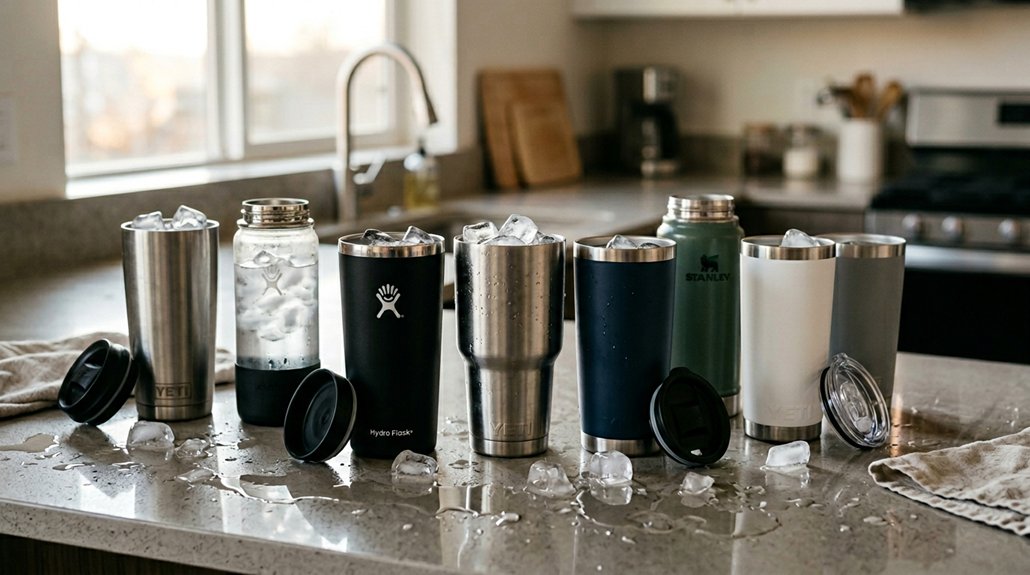
Buy the Primula Avalanche if your top priority is ice left by morning. In my overnight test, the Primula Avalanche, with its vacuum-insulated 18/8 stainless steel body and tighter sealing lid, beat the other six tumblers and kept ice the longest.
If you want the safer all-around buy for daily use, Stanley still makes strong options, especially in 30 oz and 40 oz sizes. The Stanley Quencher held cold well through a full day, but it did not match the Primula overnight, and the FlowState straw lid lost cold faster than a tighter sip lid.
If price matters as much as performance, RTIC and Ozark Trail are worth buying before you spend Stanley money. They came surprisingly close in overnight ice retention, usually cost much less, and offer a better value if you want solid insulation without paying for the brand name.
The short version is simple. Buy the Primula Avalanche for the best overnight ice retention, buy Stanley if you care more about design and daily carry, and skip straw-lid tumblers if maximum cold retention is your main goal.
Keep reading for the full ranking, plus the details that actually affect your purchase, including leak resistance, cup holder fit, lid design, and price-to-performance.
Key Takeaways
If you want a tumbler that still has ice the next morning, buy the Primula Avalanche. In this test, it beat the rest because its vacuum-insulated, double-wall stainless steel body and tighter-sealing lid held cold longer than the others. It is the stronger choice if overnight ice retention matters more than brand hype.
The Stanley Mover and Stanley IceFlow Flip Straw worked well for a full workday, but I would skip them if your main goal is waking up to leftover ice. They stayed cold for hours, yet they did not match the Primula Avalanche overnight. For all-day use, they are still worth buying if you want a familiar brand and easy sipping.
The test setup stayed simple and useful. Each tumbler sat indoors with four ice cubes and four ounces of cold water, and temperatures were checked every hour. That kind of side-by-side test tells you more than marketing copy, especially if you are deciding between similar stainless steel tumblers.
Stanley delivered the best near-full-day cold retention overall, which makes it a smart buy for commuting, errands, and office use. Yeti also performed well, but its results depended more on keeping the MagSlider lid closed, so it is a better pick if you value brand reputation and build quality over maximum forgiveness in real-world use.
If you want better value, look at RTIC and Ozark Trail before you spend premium money. These budget tumblers can come surprisingly close to Stanley and Yeti on insulation, but you may give up lid quality, long-term durability, and leak resistance. They are worth buying if price matters most, but they are not the stronger choice if you want the best overall finish and reliability.
Which Insulated Tumbler Kept Ice Overnight?
Yes, the Primula Avalanche is the one I’d buy if your main goal is ice that still exists the next morning. It makes the strongest case for true overnight performance because it pairs vacuum insulation and a double-wall stainless steel build with a snug, more closed lid design, and it carries a 24-hour cold claim. If you want the safest bet for overnight ice retention, this is the stronger choice.
Primula Avalanche is the safest bet for overnight ice, thanks to strong insulation, stainless steel build, and a tighter lid.
The Stanley Mover and Stanley IceFlow Flip Straw both look good for all-day use, but I wouldn’t treat either as the best overnight pick. The Mover reportedly kept water cold from 6 a.m. to 10 p.m., which is solid, but that still reads like daytime performance, not a reliable wake-up-with-ice result.
The IceFlow Flip Straw handled a long hot day well, but straw lids usually bleed cold faster than more sealed lids, so I’d rank it below the Primula for this specific job. That lines up with reviews showing straw lids are often splash-proof rather than fully leakproof, which usually means more air exchange.
BrüMate Era probably performs well for several hours, but the evidence here is less precise, so it’s harder to recommend with confidence if overnight ice is your deciding factor. If you’re shopping to solve one problem, keeping ice overnight, skip the guesswork and buy the Primula Avalanche.
Lid design matters almost as much as insulation. A vacuum-insulated stainless steel tumbler can still lose ground fast if the lid has a straw opening or more air exchange, which is why sealed designs usually deliver better value for cold retention.
If overnight ice matters more than sipping convenience, buy the tumbler with the tighter lid, not the trendier straw top.
How Were the Insulated Tumblers Tested?
The overnight ice result matters, but the setup matters more, and this test does a good job of showing which tumblers are actually worth buying for everyday use. If you’re choosing between a Stanley Quencher 40 oz, Yeti Rambler 30 oz, Owala 40 oz, or Hydro Flask All Around Travel Tumbler 40 oz, this kind of controlled countertop test is the stronger way to compare insulation than brand marketing.
Each tumbler got the same starting conditions, four ice cubes, four ounces of refrigerator-cold water, a sealed lid, and 15 minutes on the counter before measurements started. That makes the comparison fair, especially if you care about real kitchen, office, or bedside use more than extreme car heat or outdoor abuse.
The test also tracked hourly internal temperature with wired probes, plus room temperature and humidity, so the results reflect actual thermal performance instead of guesswork. That’s the right call if you want to know whether a pricier stainless steel tumbler really earns its higher price. For buyers, that matters even more when the cup uses 304 stainless steel, a food-grade 18/8 material valued for corrosion resistance and reduced risk of leaching.
Build quality checks add useful buying context, because insulation alone doesn’t make a tumbler worth the money. The review looked at the rim, base, and welds, then used magnet and acid checks to screen steel quality, which helps separate better-built 18/8 stainless steel models from cheaper cups that only look similar online.
Infrared scans looked for early heat leaks, and repeat tests with open-mouth and dent scenarios pushed the tumblers beyond ideal conditions. That makes the findings more useful if you’re deciding whether to pay more for a Yeti or Zojirushi, or save money with a Simple Modern or Reduce model.
The main limitation is simple; this test favors normal countertop use, not rough travel, backpack drops, or eight hours in a hot car. If leak resistance, cup holder fit, and commute-friendly design matter as much as cold retention, you shouldn’t buy on overnight ice results alone.
How Did All 7 Tumblers Perform?
If temperature retention is your top priority, buy the Stanley. It delivered the strongest real-world cold performance of the seven tumblers, with ice lasting close to a full day and verified cold retention around 9 hours, which makes it the strongest choice for long commutes, desk use, and all-day errands. In broader lab testing, Zojirushi’s SX-FSE45 stood out as a top spill-proof tumbler for hot-drink heat retention.
Yeti still performs well, but I would only recommend it if you know you will keep the MagSlider closed most of the time. Leave that opening exposed and cold retention drops too quickly, so it is worth buying for careful users, not for constant sippers.
Thermos Alta and Contigo Streeterville offer better value if you drink steadily through the day instead of chasing maximum ice life. The Thermos Alta held cold for 5 hours even with the lid open, and the Contigo Streeterville also cleared 5 hours in both lid positions, which makes both more practical than some premium rivals in normal daily use.
Corkcicle is the one I would rank lower for insulation performance. Its commuter-friendly design still works for shorter trips and quick coffee runs, but if you care most about holding heat or cold for longer stretches, skip this one and buy Stanley, Thermos Alta, or Contigo instead.
| Tumbler | Verdict |
|---|---|
| Stanley | Best overall, worth buying |
| Yeti | Strong performer, but only with the MagSlider closed |
| Thermos Alta | Better value, steady and practical |
| Contigo Streeterville | Easy daily pick, solid price-to-performance |
| Corkcicle | Fine for short trips, weaker insulation |
Why Did Budget Tumblers Match Premium Brands?
Cheap tumblers often match premium brands on insulation, and that makes budget picks like the RTIC 20 oz Tumbler and Ozark Trail 30 oz tumbler worth buying if your main goal is cold drinks that stay cold. If you care most about ice retention and basic heat holding, you don’t need to pay Yeti Rambler prices just to get solid performance.
If your priority is insulation, budget tumblers like RTIC and Ozark Trail can rival Yeti for far less.
The reason is simple. Many lower-priced cups use the same 18/8 stainless steel, double-wall construction, and vacuum insulation as premium models, so the core temperature performance ends up very close in real use. This double-wall insulation is the key feature that helps quality tumblers keep drinks cold for hours.
That is why models like RTIC and Ozark Trail can hang with the Yeti Rambler 20 oz on overnight ice and typical commute use. In testing, some budget tumblers delivered Yeti-level cold retention and around 4.5 hours of heat retention, which is more than enough for coffee on the drive to work or water through most of the day.
The bigger differences usually show up in the details that affect ownership. Yeti often gives you better powder-coat durability, tighter lid fit, stronger brand consistency, and better long-term resistance to dents if you drop your cup a lot.
If you want the better value, buy the cheaper tumbler when the lid seals well, the shape fits your cup holder, and the cup is dishwasher safe.
If you want the stronger choice for daily abuse, cleaner finishing, and more dependable build quality, the Yeti Rambler still earns its higher price.
Which Insulated Tumbler Is Worth Buying?
The Stanley Quencher H2.0 FlowState is the insulated tumbler most people should buy. It offers the best mix of cold retention, brand reliability, stainless steel build quality, and everyday usability, so it earns the top spot if you want one tumbler and don’t want to overthink it. In testing, its easy-grip handle and wide straw helped make it especially comfortable for everyday sipping, even though slight lid leakage can happen when tipped.
If you want the better value, buy the Simple Modern instead. At $22.99, it costs much less than Stanley and still delivers about 16 hours of ice retention**, which makes it the stronger choice for shoppers who care about price-to-performance** more than hype.
The Iron Flask is worth buying if you want the most complete package. You get multiple straws, cleaning tools, and strong cooling performance****, so it feels like a smarter purchase than tumblers that charge more and include less.
Do not buy a tumbler based on looks or brand loyalty alone. Yeti and Hydro Flask still make solid stainless steel tumblers, but they weren’t the best cold retainers here, so they’re harder to justify if insulation matters most.
If you need the cheapest tumbler that still makes sense to buy, the Ozark Trail at $8.74 is hard to beat. It’s worth buying for the price, but you should expect less polish, a less premium finish, and fewer small convenience details.
If spill resistance matters more than weight, buy the Milwaukee Packout. It’s the stronger choice for rough use and secure transport, but skip this one if you want a lighter tumbler for daily carry or easier cup holder use.
Conclusion
If you want ice to last through a full workday or overnight, buy for insulation and lid design, not the logo. In this test, tumblers with tight-sealing lids, solid double-wall vacuum insulation, and narrower openings beat flashier options, and a few lower-priced picks delivered better value than premium names.
The stronger choice for most people is a stainless steel 18/8 tumbler in the 20 to 30 oz range with a snug slider or screw-top lid. Models like the Yeti Rambler 20 oz, RTIC 20 oz Tumbler, and Stanley Quencher H2.0 30 oz usually justify their price because they balance ice retention, durability, and everyday usability, though the Stanley is less leak-resistant than the Yeti or RTIC.
If you lose tumblers often or want extras, the RTIC is worth buying because it often costs far less than Yeti while keeping up on insulation. Skip weaker plastic-lid designs if you need true overnight performance, because those tend to lose cold faster even when the stainless body looks similar.
For short errands or desk use, the weaker tumblers still do the job, so they are not automatic skips. But if overnight ice matters, lid fit, leak resistance, cup holder compatibility, and dishwasher safety should drive your decision more than branding or marketing claims.